Building a User Feedback Program
Leadership, User Research
2025
Lead Product Designer
Work Details
Background
Airtime lacked a reliable way to gather user insight. While we occasionally ran tests through third-party platforms, the feedback was often vague, disinterested, and expensive. Our Director of Product summed it up: these users didn’t care about our app, they just wanted the payout.
Without a direct line to our actual users, we were designing in the dark. There was no system in place for continuous discovery, no structured way to validate early ideas, and no feedback loop. We risked building features based on assumptions, not evidence.
My Vision
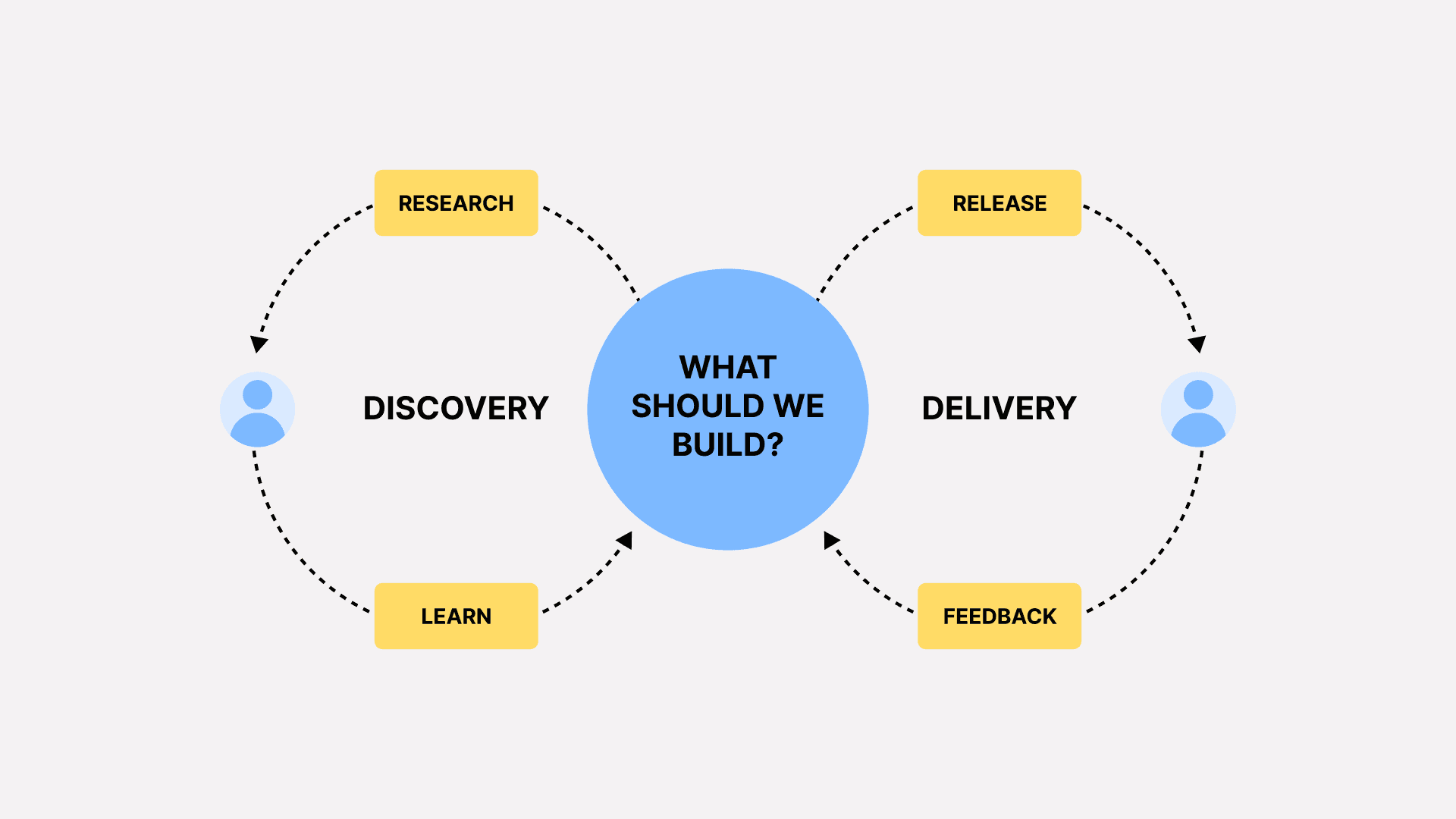
As Lead Product Designer, I took the initiative to change that. I set out to create a continuous, lightweight user research practice that could live inside our existing workflow, no separate team, no expensive tooling.
My vision was to make user feedback a core part of our design culture -embedded, efficient, and owned by the design team. This would enable us to move smarter and with confidence.
Continuous Discovery
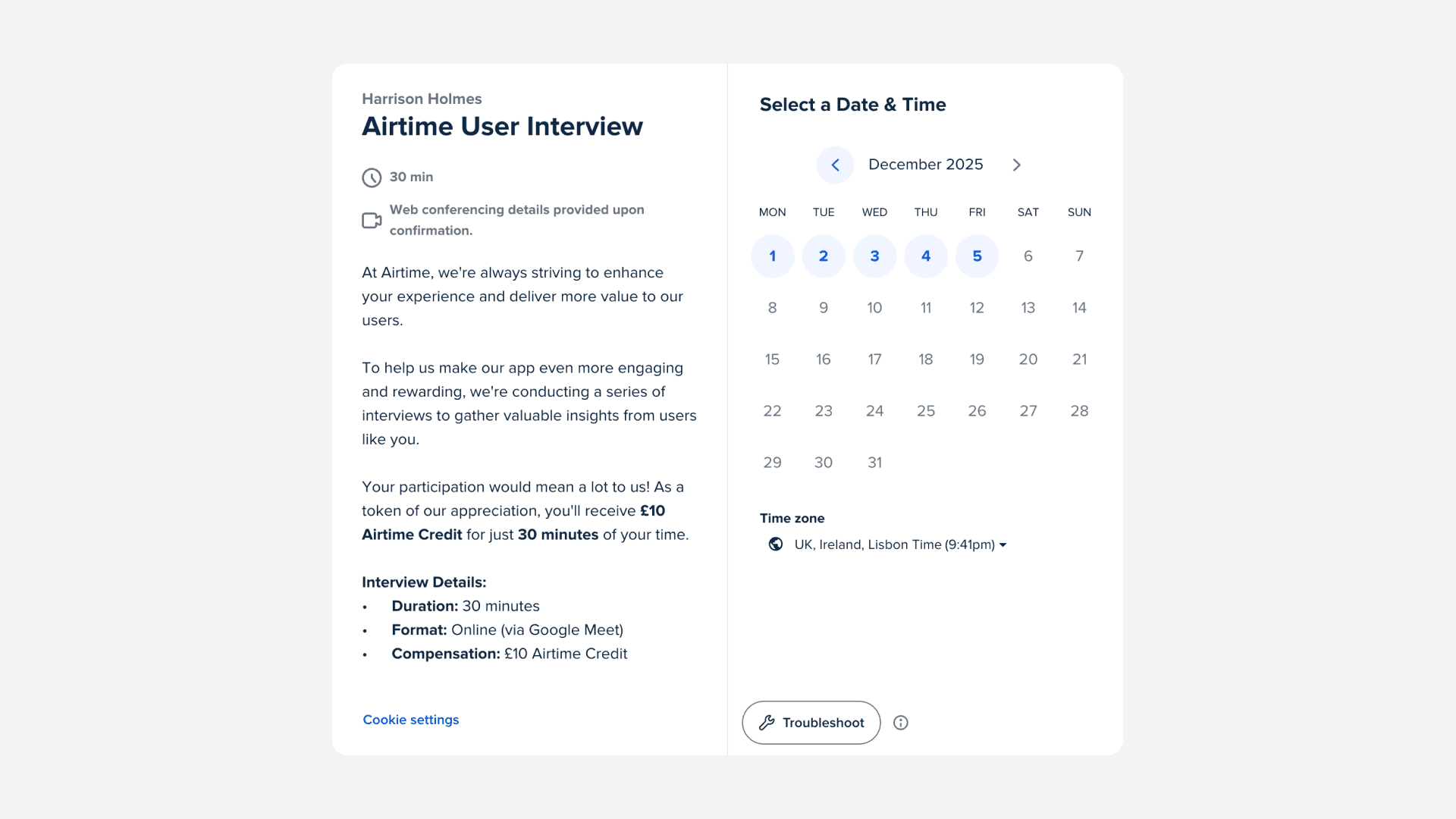
The foundation of the program began with weekly user interview sessions. I set up an automated email that went out every Friday, inviting selected users to book a 30-minute call via Calendly in exchange for £10 in Airtime credit.
These sessions gave us reliable access to engaged users and quickly surfaced clear patterns - limited retailer choice, confusion in certain journeys, and a tendency to “set and forget” our CLO technology, which signalled low active engagement.
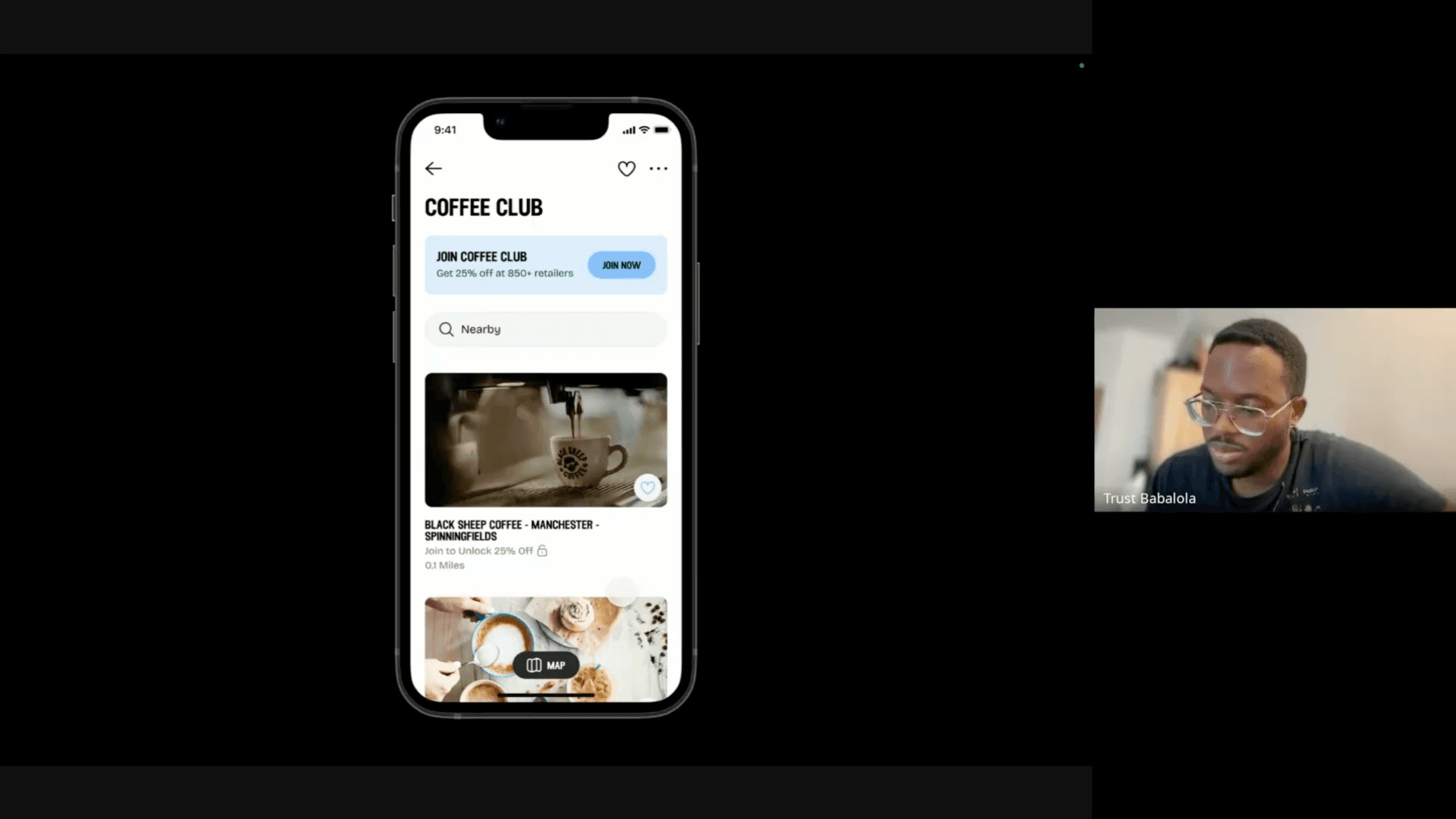
As the sessions evolved, we layered in lightweight usability testing. Sharing early prototypes allowed us to watch users interact with new designs and capture real-time reactions. These conversations became the groundwork for an insight-driven design culture, but it wasn't without flaws.
Repository
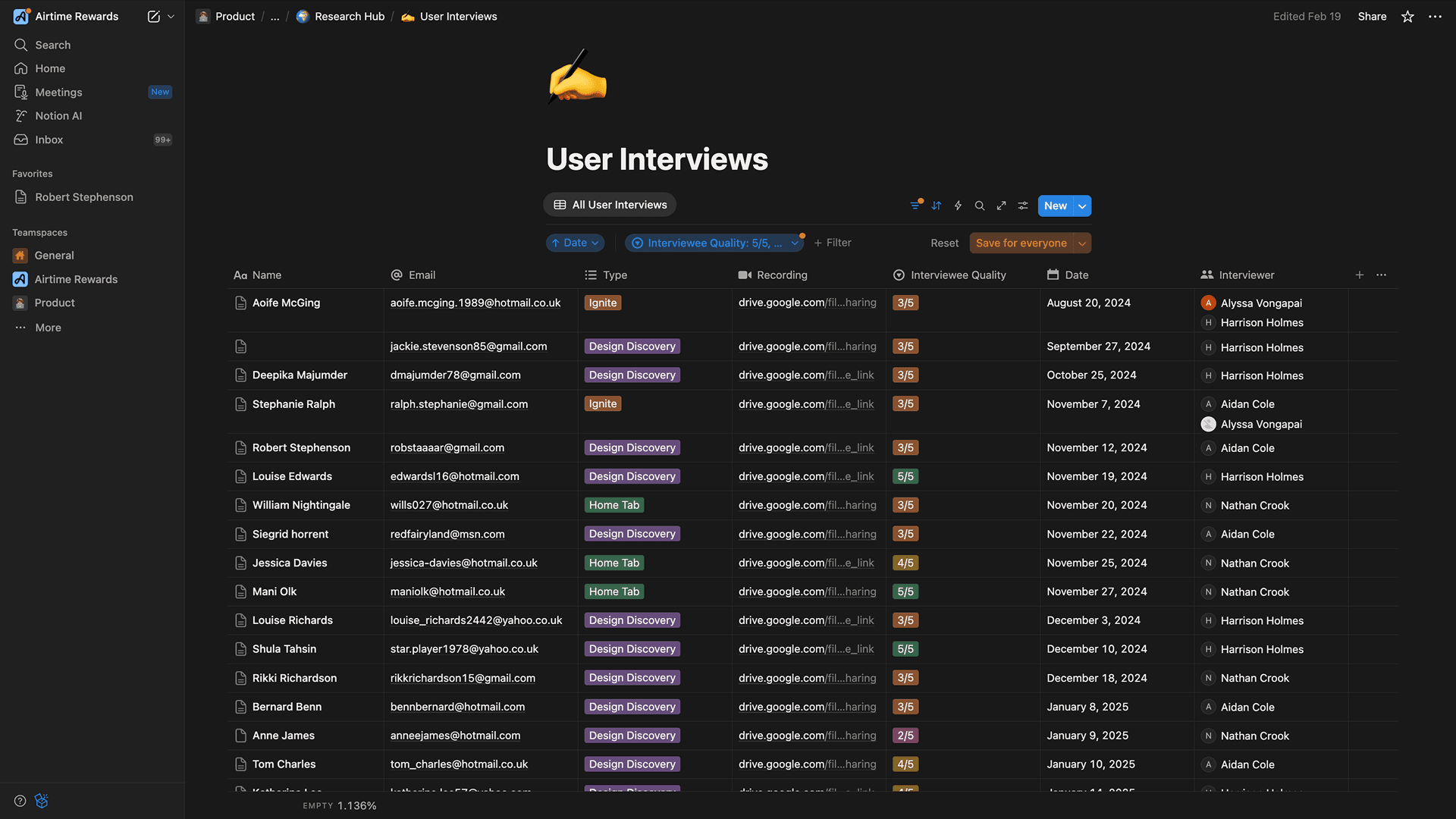
To ensure none of this feedback was lost or siloed, I built a shared User Insights Repository in Notion. Every interview was synthesised into structured notes, tagged by product area such as “Design Discovery,” “Ignite,” or “Trips & Escapes.” This tagging system made it easy for anyone on the team to locate insights relevant to their current work.
Very quickly, I realised we needed a way to assess the quality of interviews. Some users gave thoughtful, detailed input, while others struggled to articulate useful feedback. To address this, I added a simple quality rating to each interview entry. This was a quick, effective way to identify the most insightful participants for future sessions or tests.
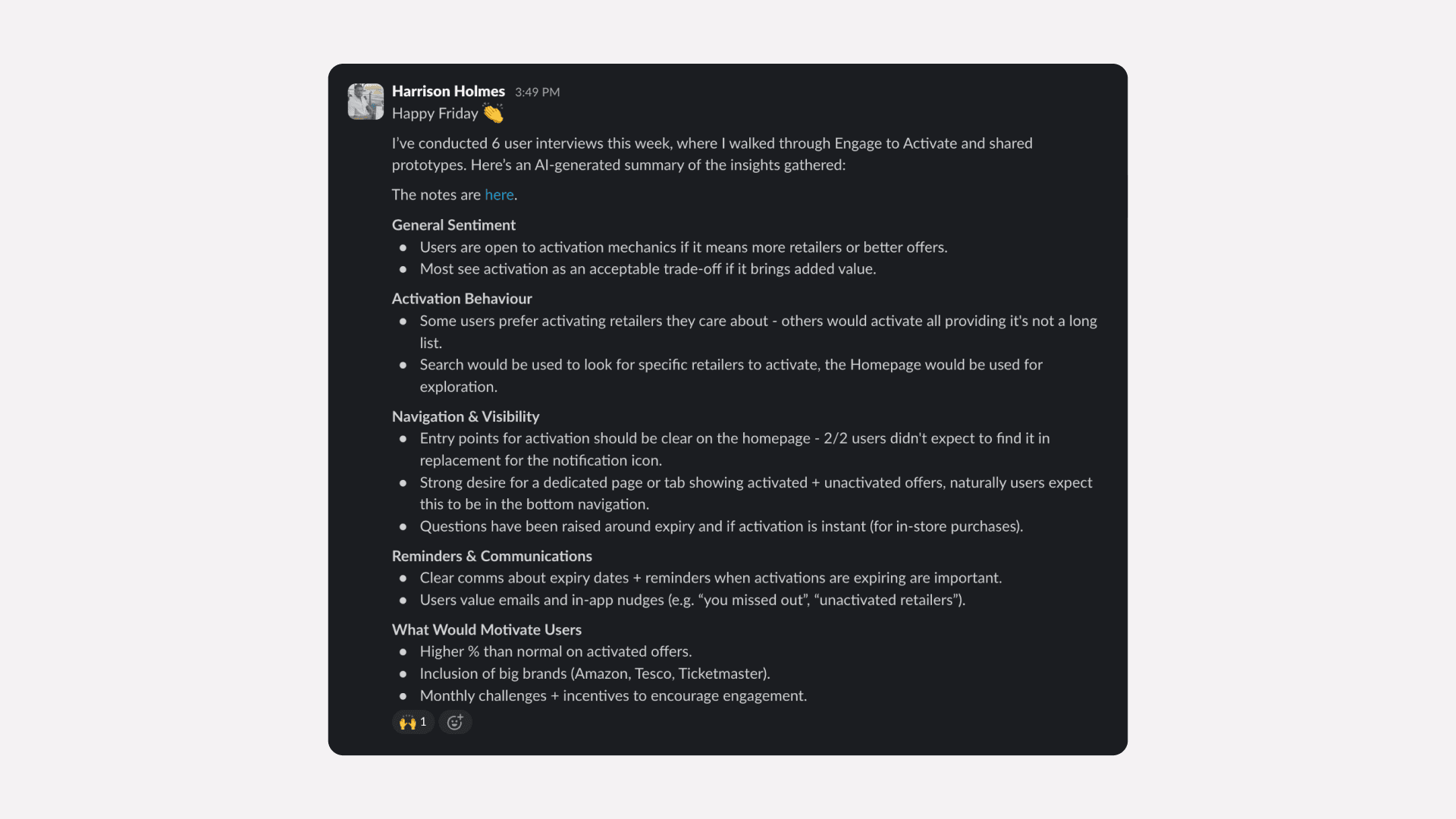
After each interview, the team and I shared summaries in Slack, turning raw conversations into clear, actionable insights for the wider business. To speed up the workflow, we used Google Gemini to summaries transcripts, and ChatGPT to structure insights into a Jobs-to-be-Done framework.
WhatsApp Group
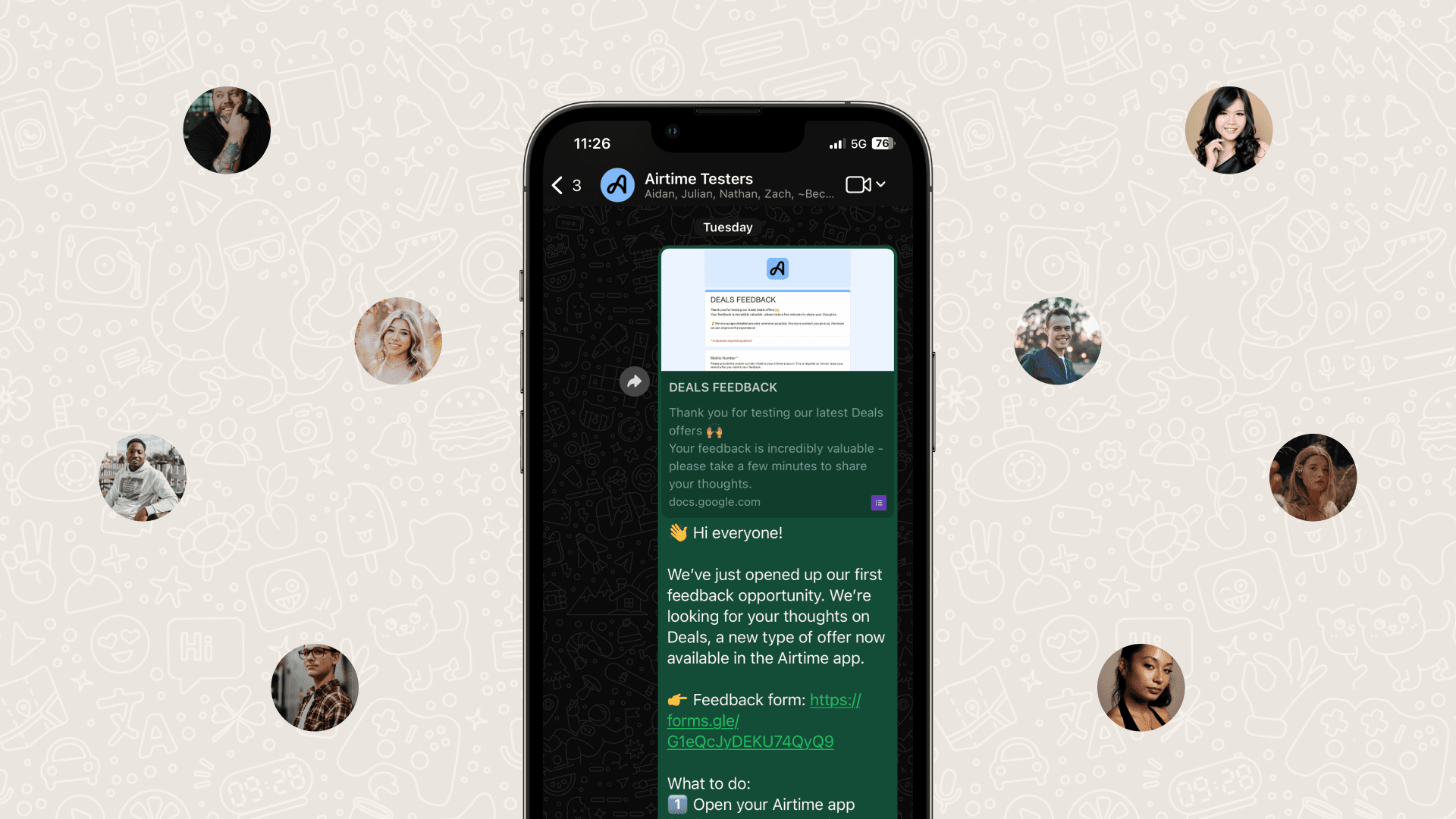
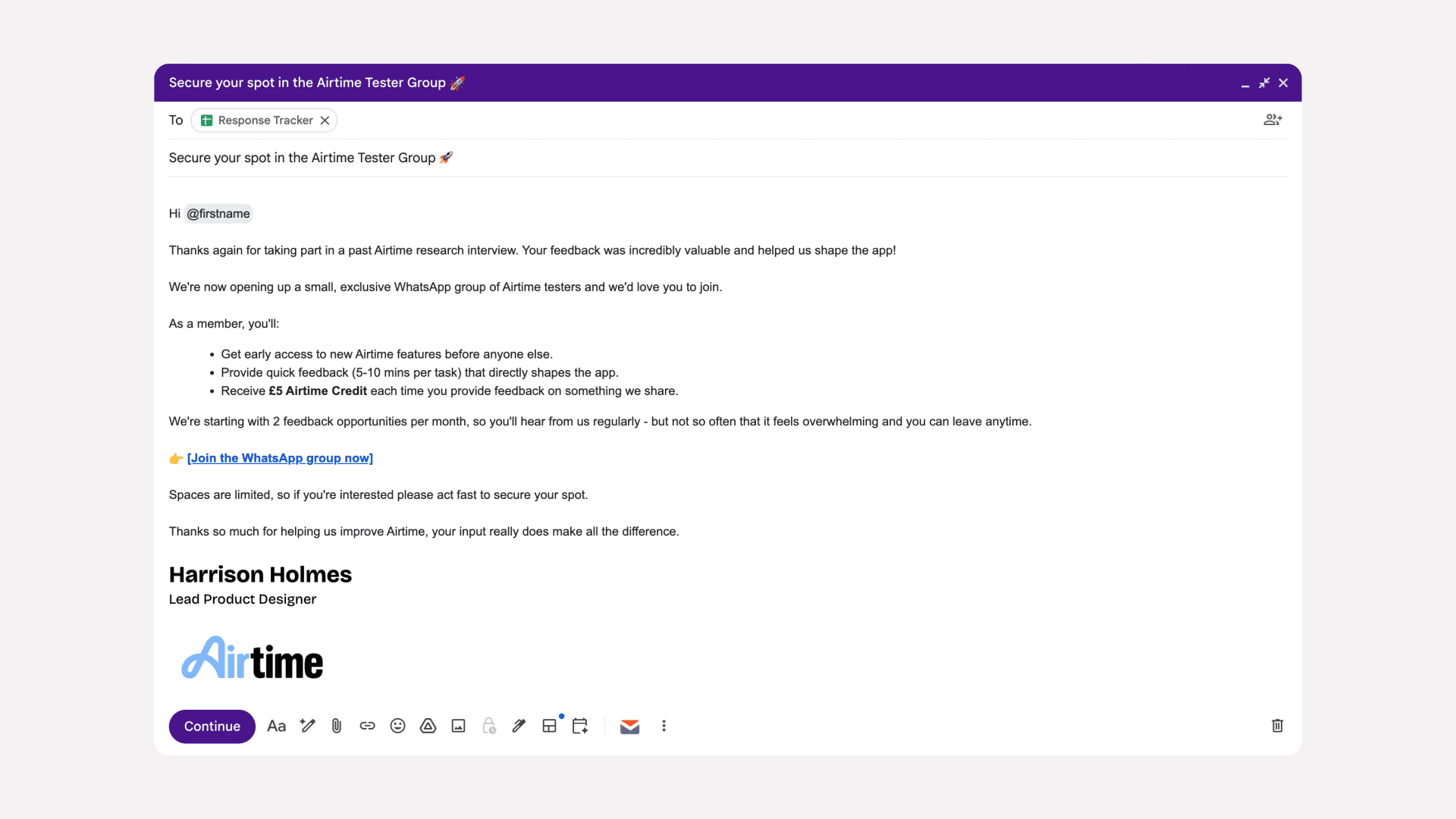
Moderated interviews were useful but slow, hard to scale, and often unreliable when no-shows sometimes happened. The interview program we'd built gave us a database of 70+ users, each rated by feedback quality, creating a strong foundation for a better approach.
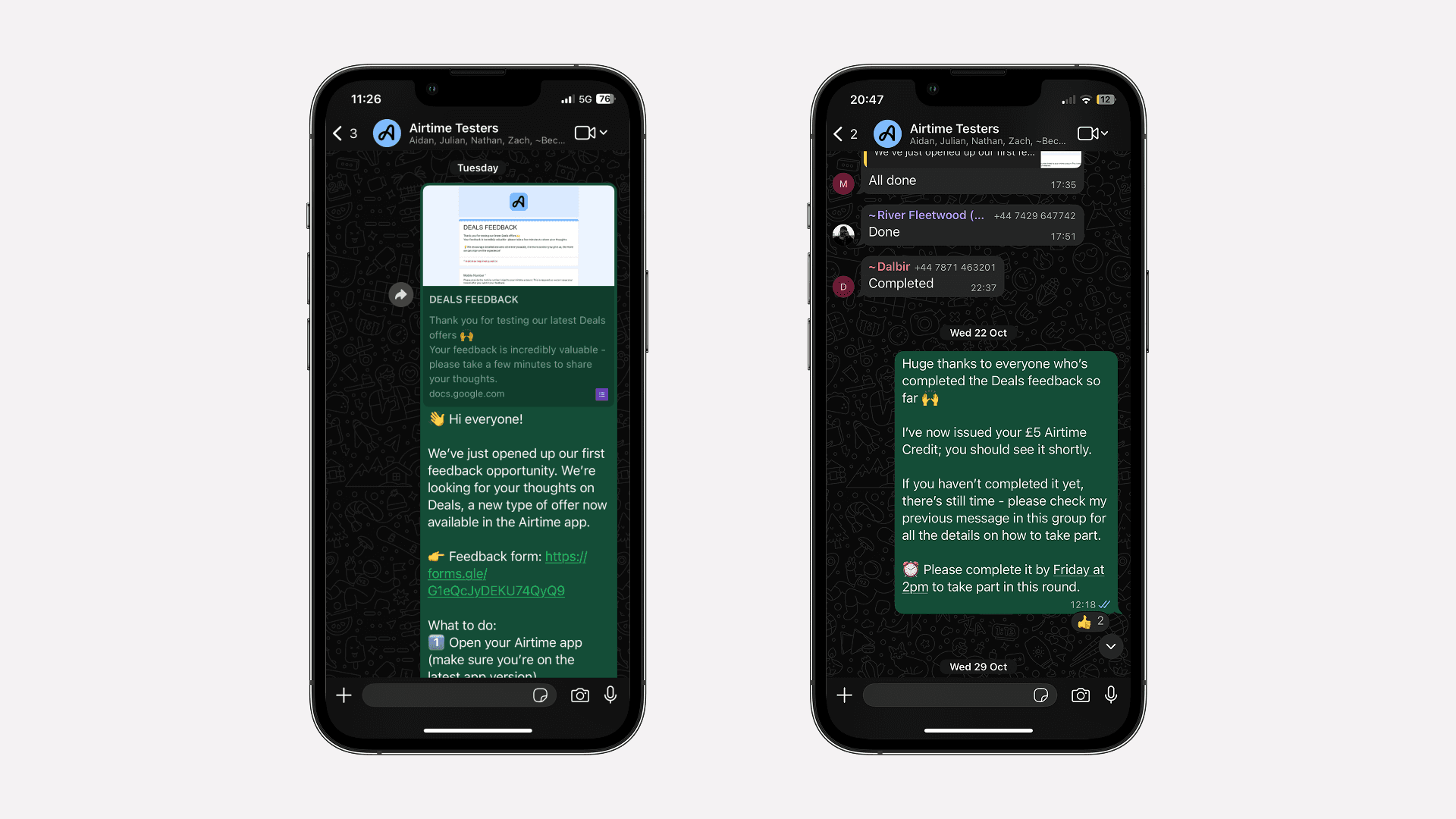
Working with finance, we set up a simple incentive model to support 15 top rated testers at £5 per study. As a design team, we selected the strongest candidates and kept a buffer list in case some didn’t join. I sent invitations in batches and tracked responses - the group filled within 24 hours.
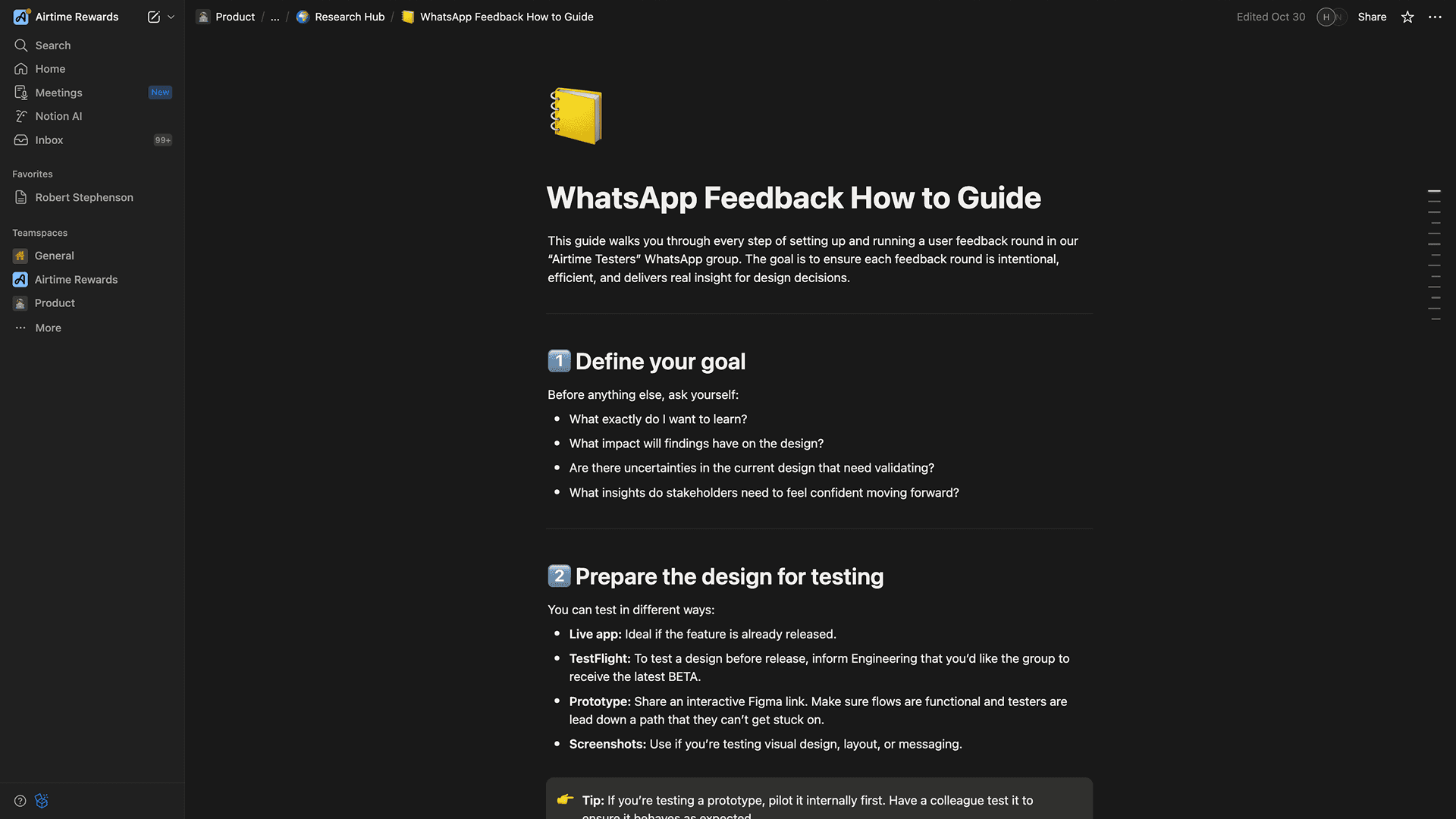
To ensure consistency, I created clear guidance and templates for running tests. This made it easy for the team to validate ideas quickly using Figma prototypes, screenshots, TestFlight builds, feature-flagged flows, or even the live app. It became our quickest route to meaningful user feedback.
Outcome
The WhatsApp group quickly became a high-speed validation engine. We often received responses within minutes. We now run around three WhatsApp tests a month, supported by more than 540 minutes of user interview time giving us faster, clearer insight than ever before.
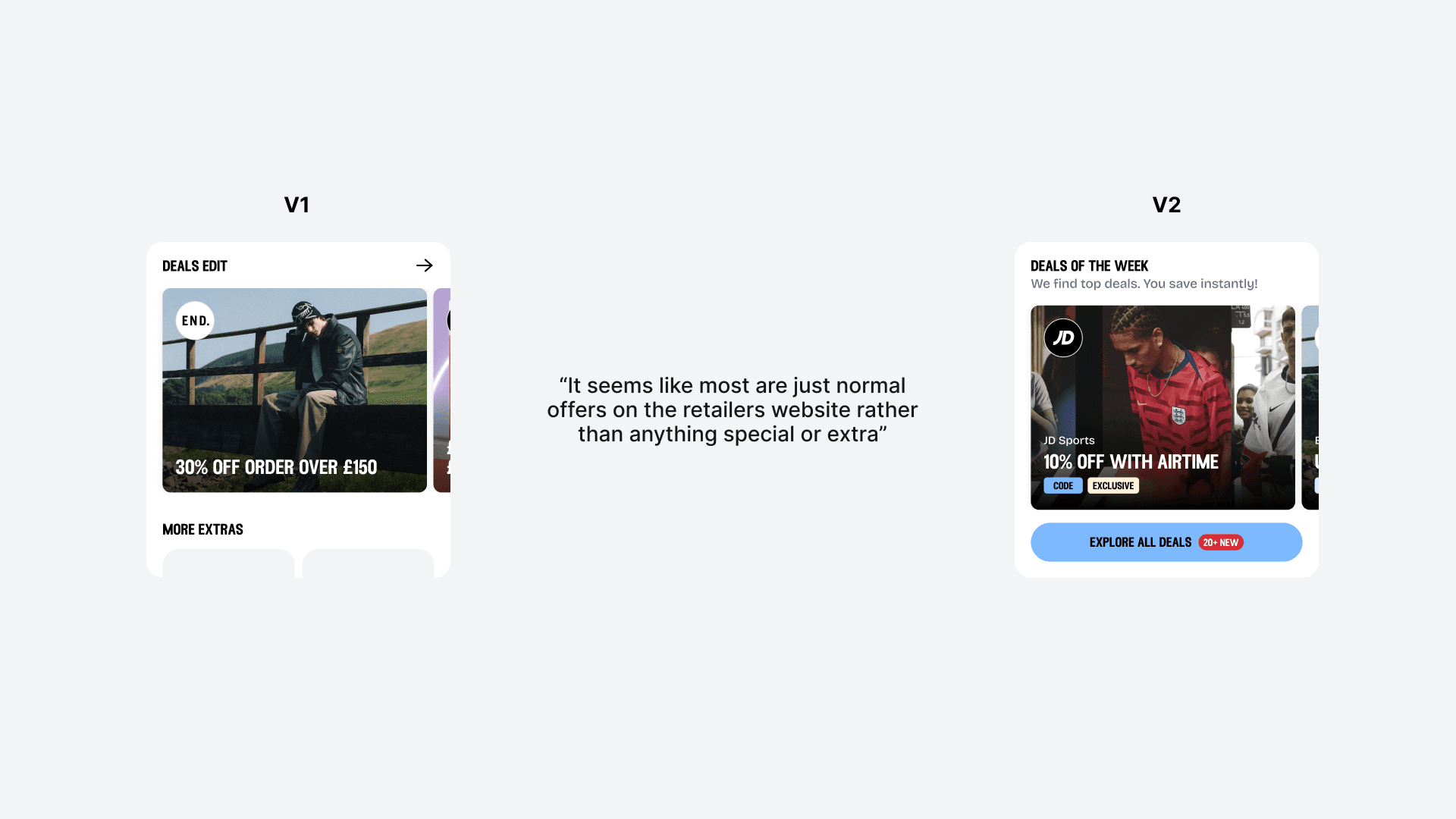
One example was our test of “Airtime Deals,” a new affiliate offer positioned as an alternative to card-linked offers. Users immediately flagged that the offers seemed easily found elsewhere, questioning Airtime’s unique value. This surfaced within 24 hours, and we quickly repositioned the feature.
As results accumulated, leadership fully embraced the program. What began as a small initiative soon became a formal part of our process, with weekly interviews running alongside rapid WhatsApp testing. Our Director of Product called the initiative a “game changer,” reducing the risk of building the wrong thing and building a user-centric culture.
Reflection
Be Resourceful
This project pushed me to be creative with research methods. Without research teams or expensive tools, we relied on what users already used, like WhatsApp. Meeting them on their terms gave us richer, faster insight and showed that effective research is about connection, not cost.
Growing Interview Confidence
When I began interviewing, my skills were limited, but weekly sessions quickly built confidence. Repetition helped me ask better questions and gather deeper insight. Reviewing sessions with my team strengthened our skills and made interviewing a shared capability.
Build Knowledge Long-Term
Maintaining the insights database showed the value of treating research as a long-term asset. Instead of notes disappearing in docs or Slack, we built a shared, searchable repository. It took time to build the habit, but it became a trusted reference across projects that others now uses.