O2 x Airtime Onboarding
Conversion, Product Design
2025
Lead Product Designer
Work Details
Background
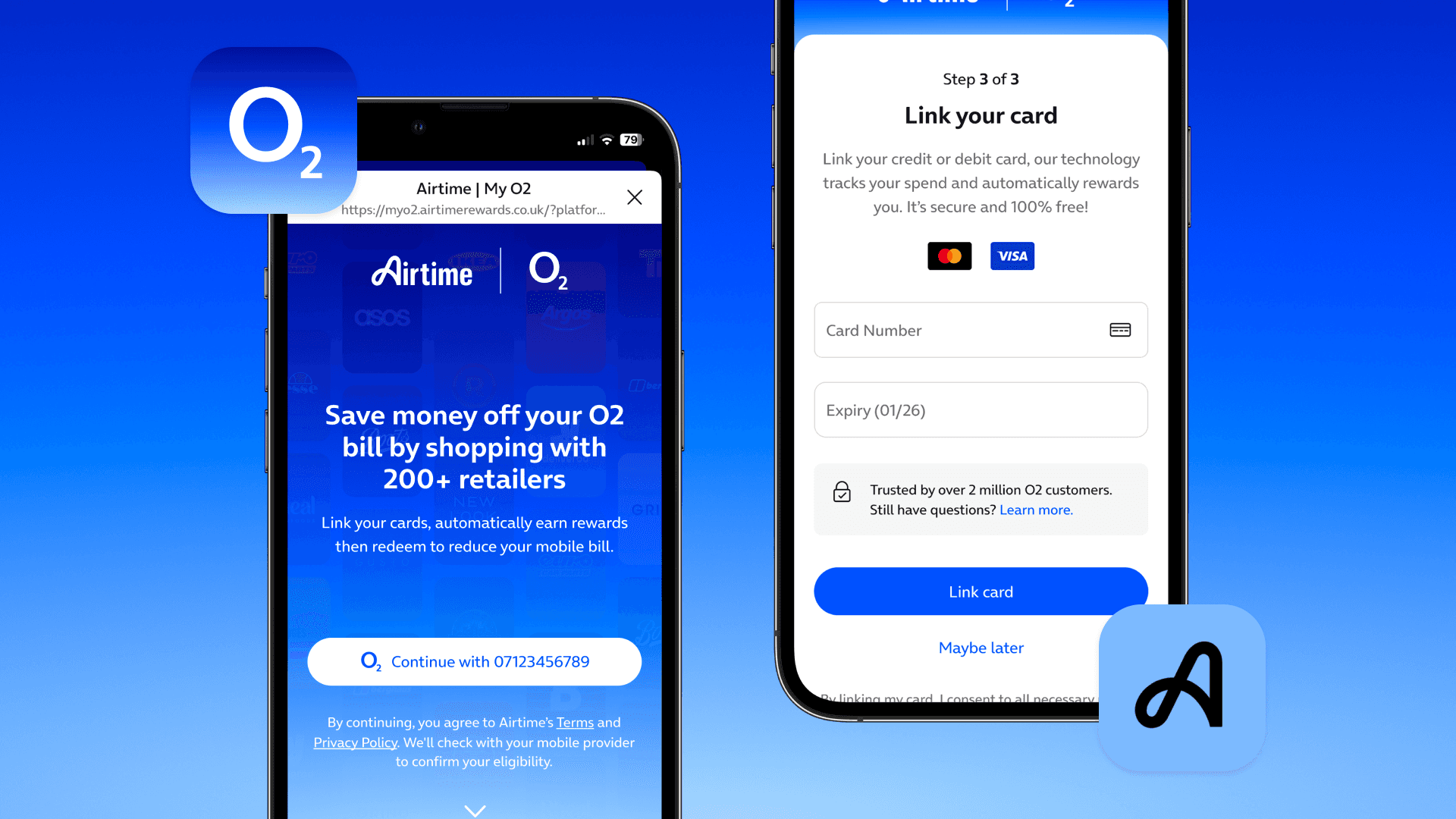
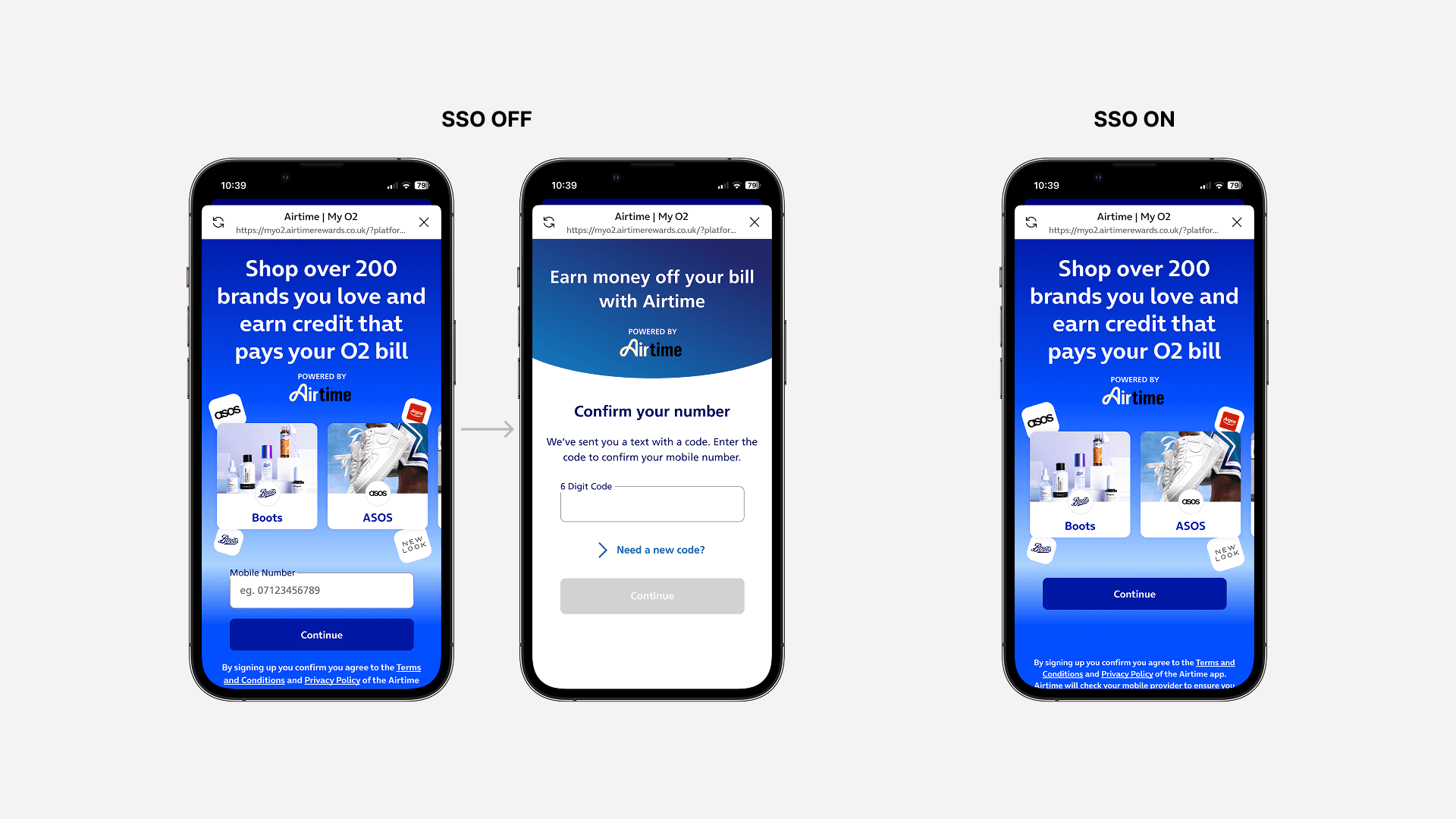
Airtime’s partnership with O2 places a simplified version of the app within MyO2, accounting for around 60% of total acquisition. To streamline onboarding, we introduced Single Sign-On (SSO), allowing O2 users to pass their details through automatically.
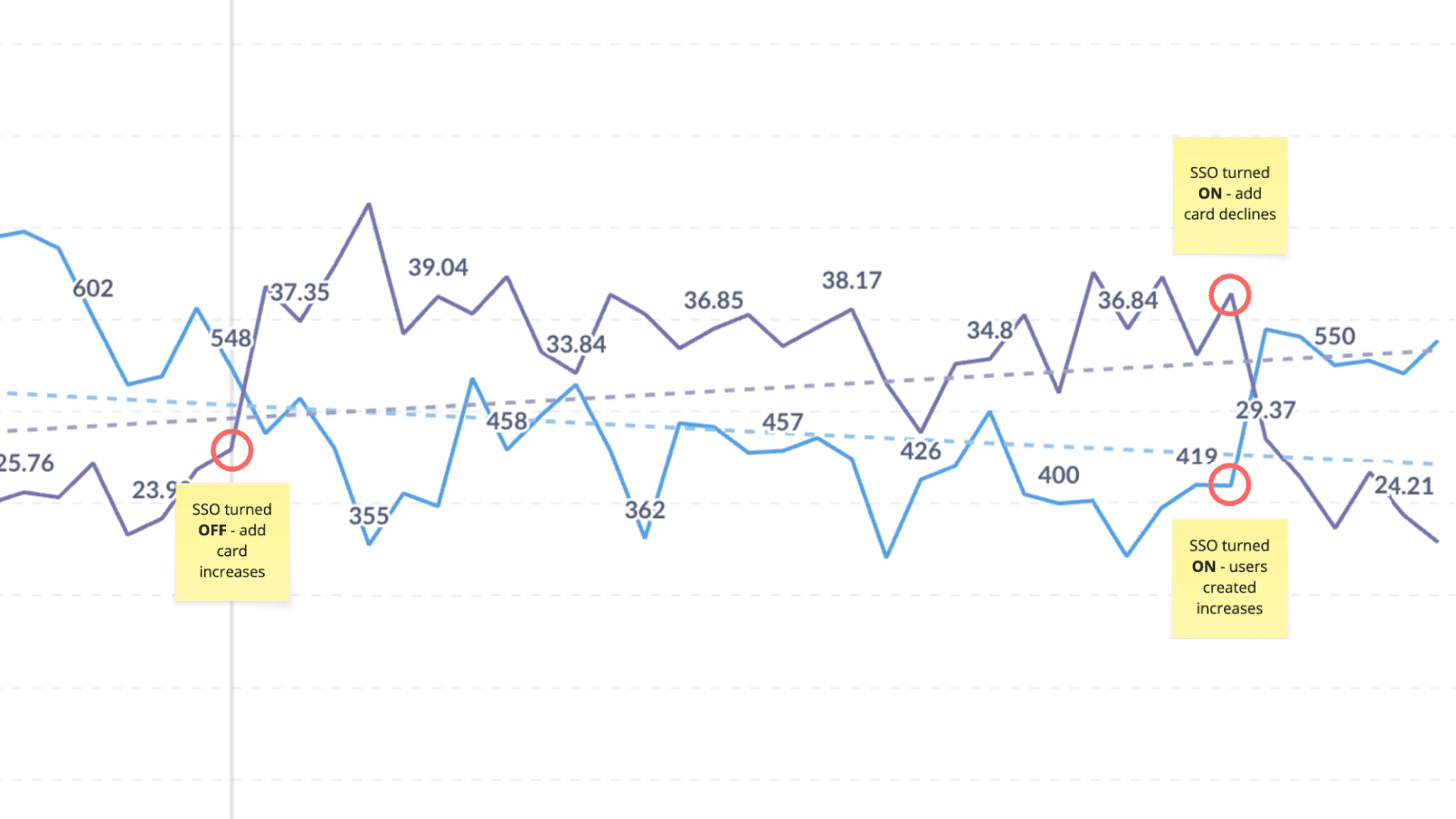
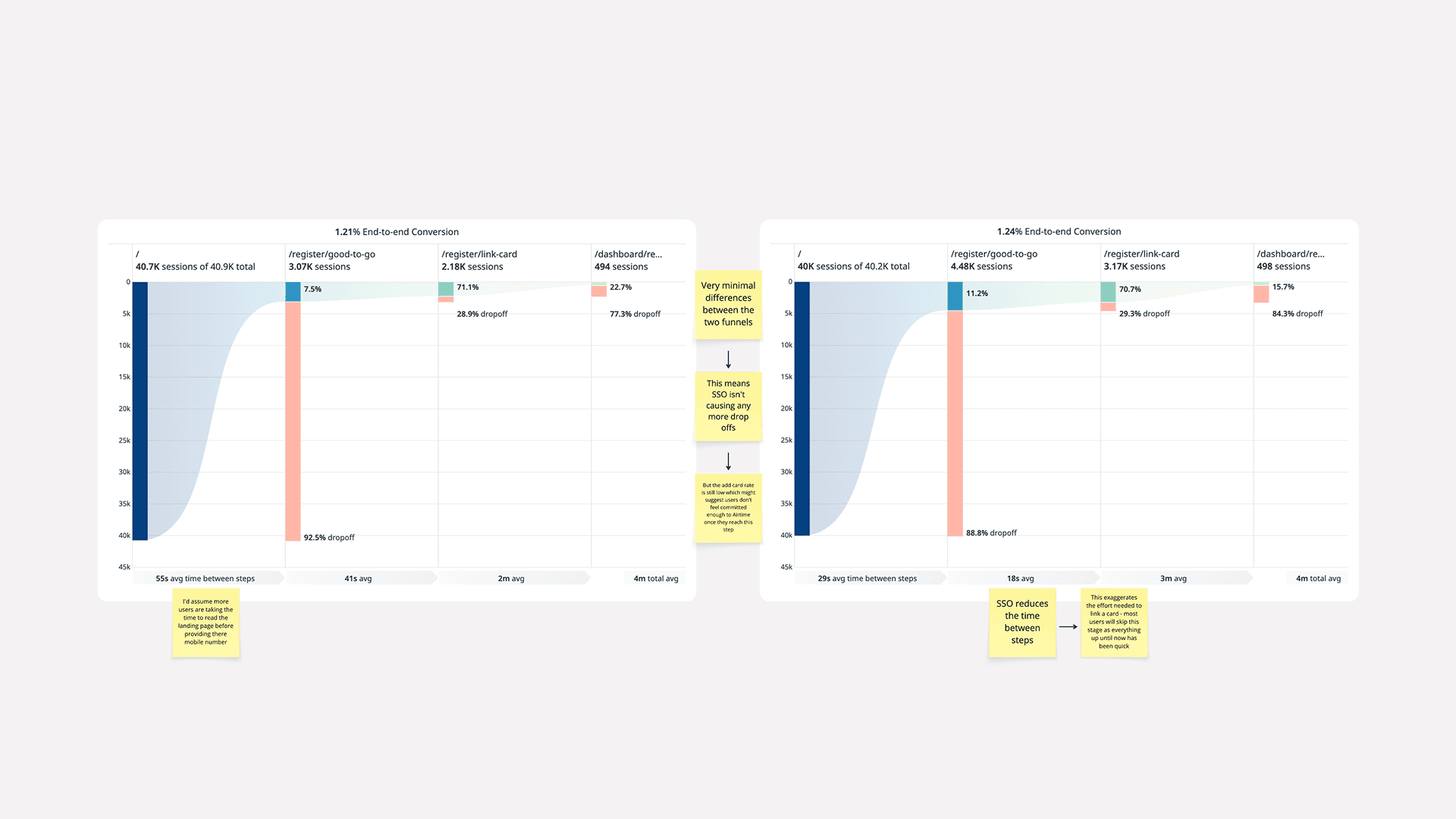
SSO led to a 35% increase in account creation but also a 15% drop in users linking their card, the step required to start earning rewards. When SSO was turned off, card adds recovered.
Problem
My task was to understand why users signing up through SSO were less likely to add a card, and to introduce a solution that preserved the benefits of SSO while driving stronger completion of the card add step.
Goal
We set a clear target: increase the percentage of MyO2 users who add a payment card during onboarding. This uplift would enhance Airtime’s acquisition funnel, ensure users could start earning rewards from day one, and support long-term engagement and retention across the O2 channel.
Discovery
Quantitative Data
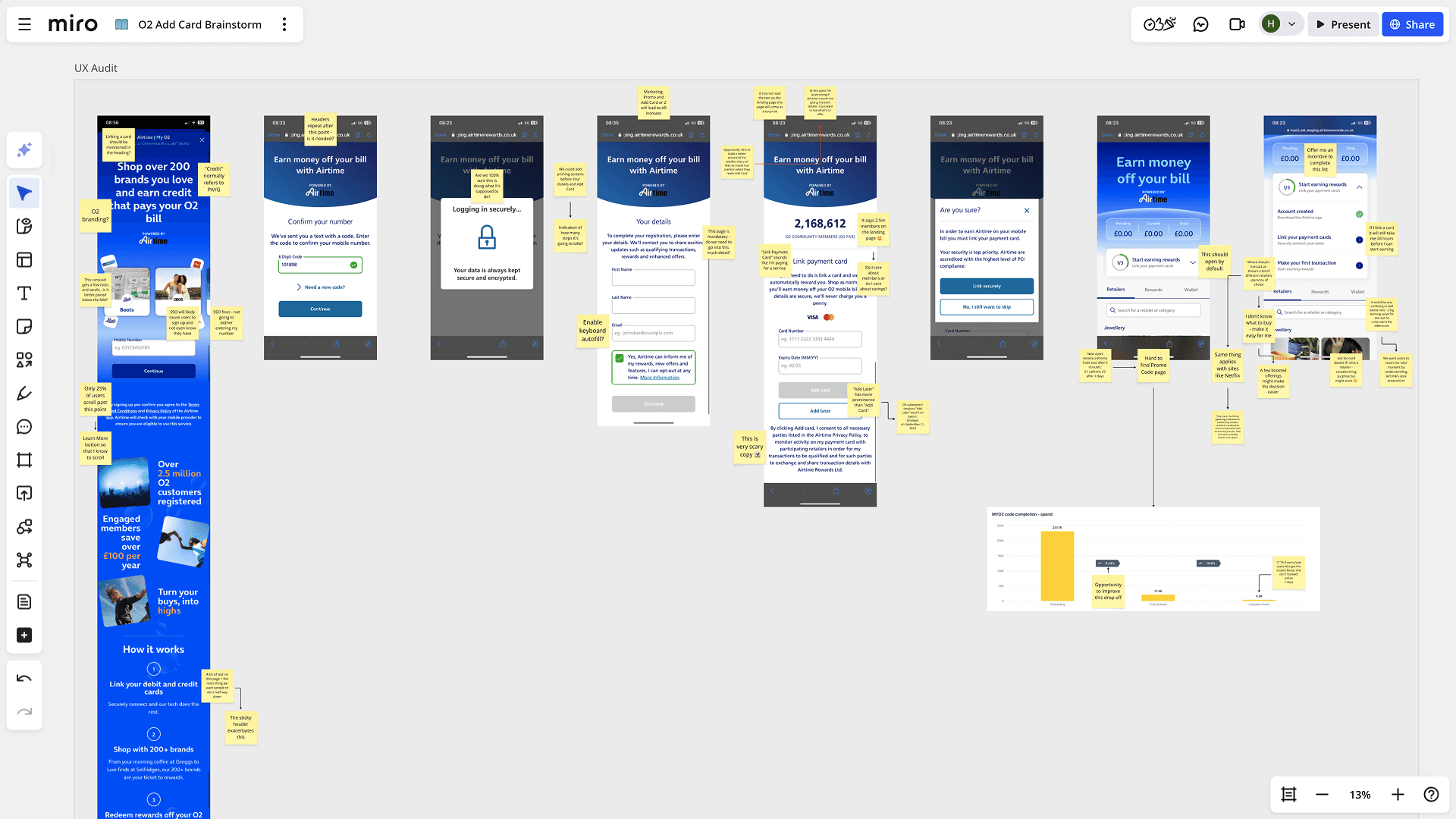
To understand the impact of SSO, I analysed onboarding performance in Metabase, tracking how conversion shifted when SSO was toggled on and off. I used Datadog for funnel analysis and benchmarked performance against Airtime’s EE integration, which had always used SSO.
User Interviews
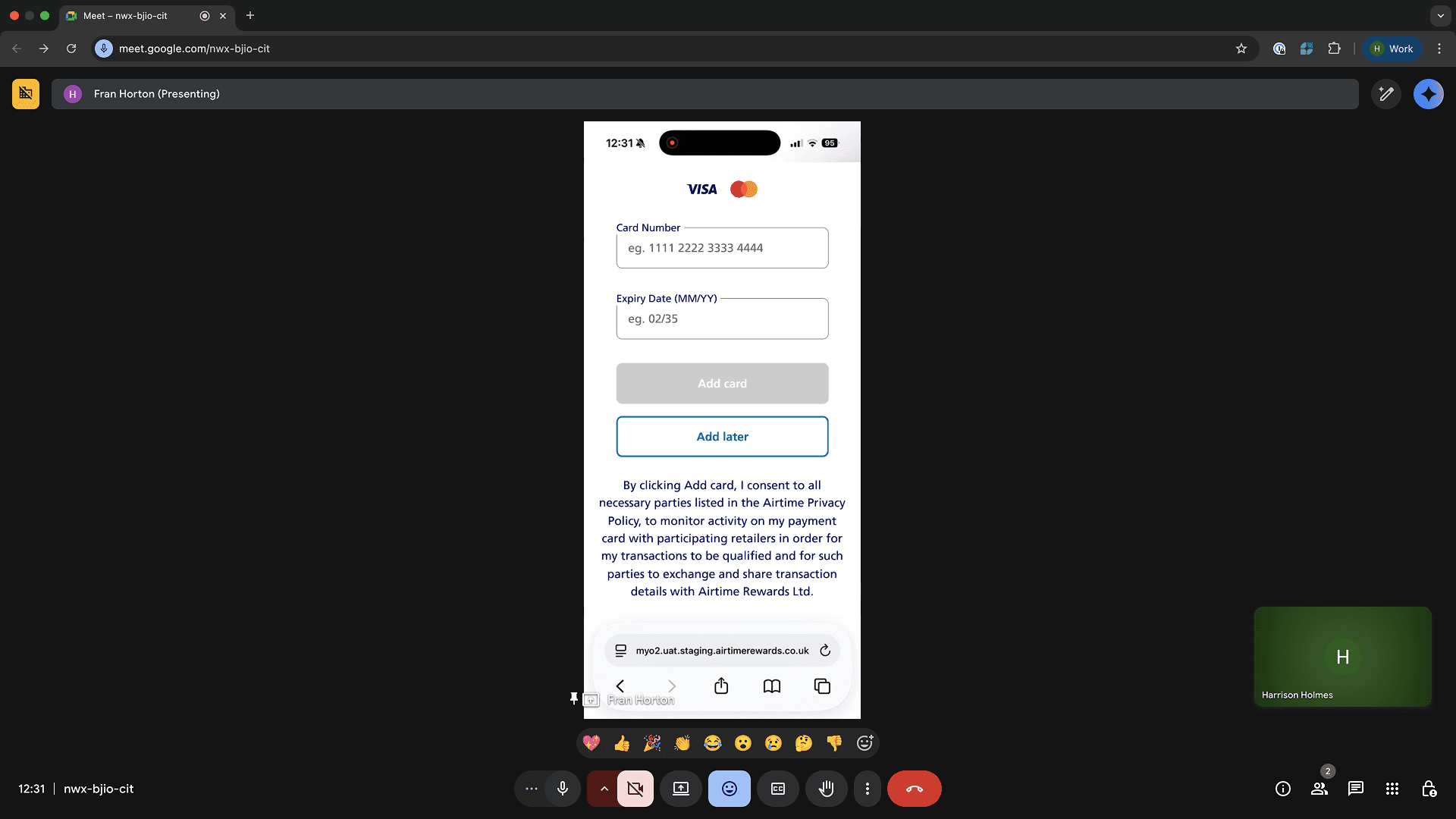
I ran user interviews, asking participants to complete the onboarding flow in a UAT environment - allowing them to interact with real fields and even link their own cards. This surfaced more natural, honest feedback.
Synthesising findings with ChatGPT, the issue wasn’t SSO itself - it was speed without context. The flow felt so fast and users didn’t realise they were joining a new service. By the time they hit the card step, they weren’t committed. The landing page lacked clarity and the value wasn’t clear.
Ideation
Refining the Problem
Early ideas focused on small landing-page tweaks to clarify Airtime was a separate service, but the gains were expected to be minimal. It quickly became clear the problem ran deeper, and that real impact meant rethinking the entire onboarding experience not just patching the flow.
Collaborative Exploration
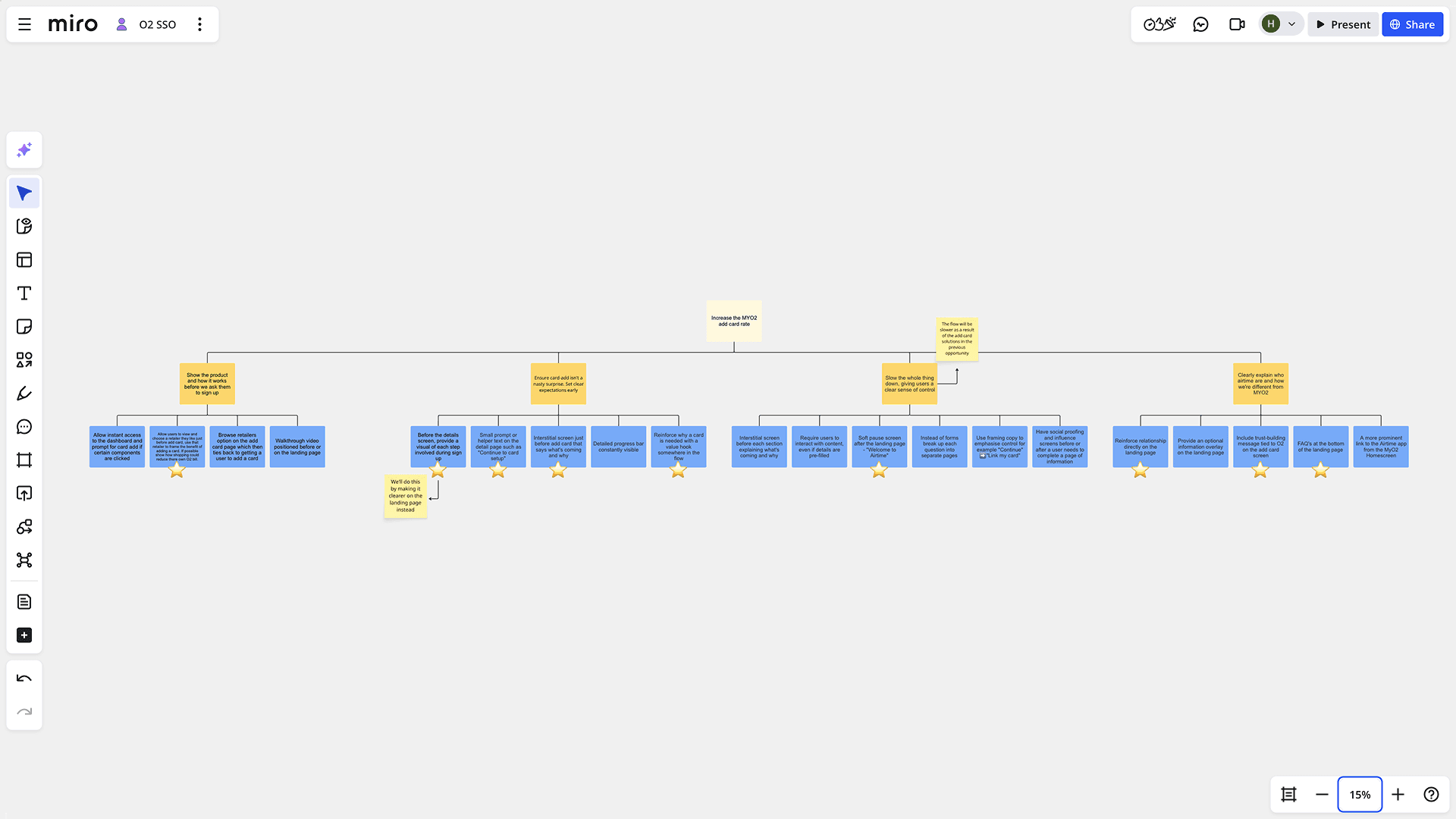
I ran a collaborative workshop with designers, PMs, and key stakeholders. We built an opportunity solution tree based on the research and then dot-voted the strongest ideas to shape the direction of the redesign, expanding the focus beyond the landing page to a more holistic approach.
Idea Execution
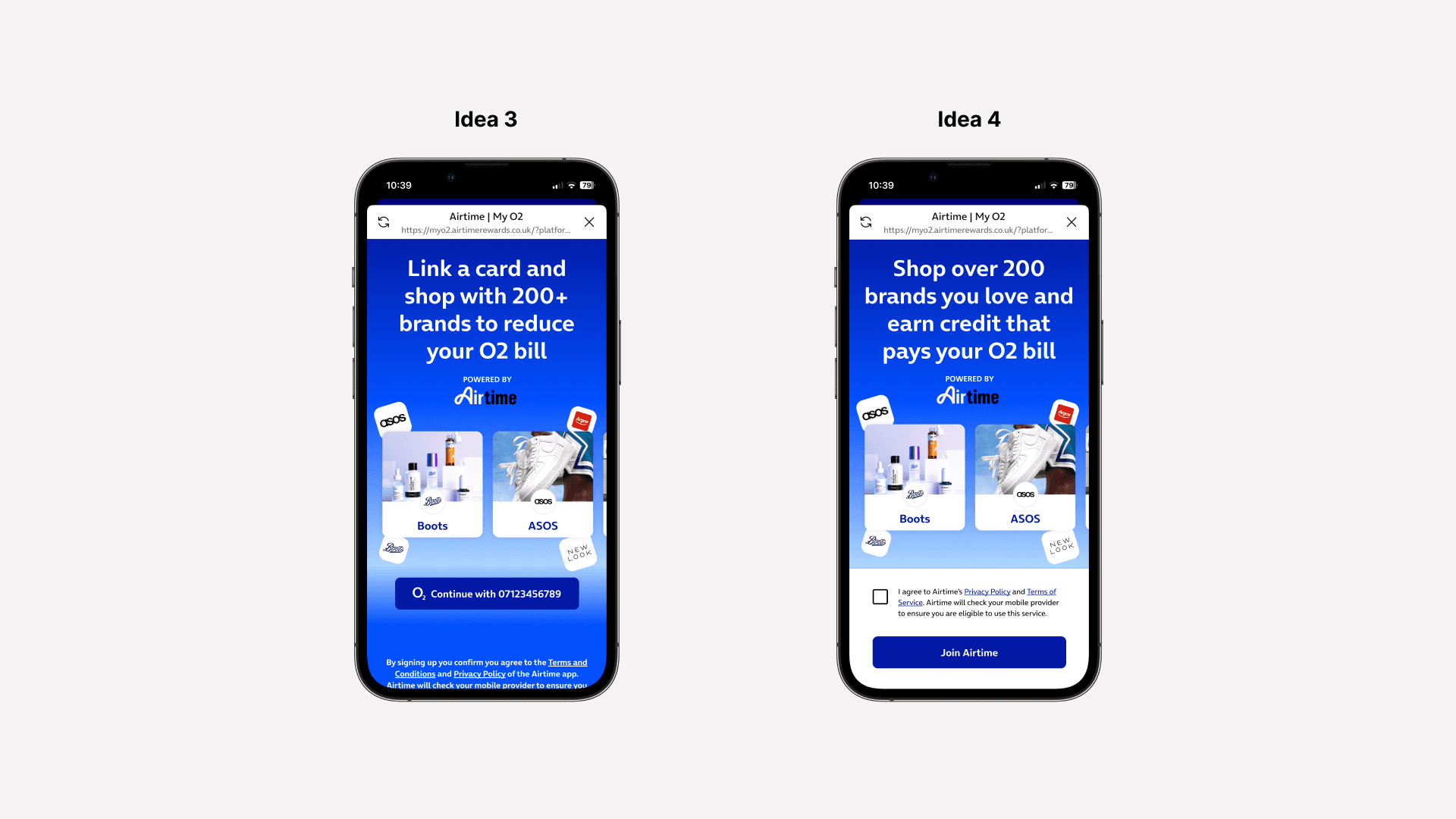
The result was two new flows, each starting with a clearer landing page that explained Airtime’s purpose and its separation from O2. A quick “Let’s get started” step helped ease users in, and co-branded visuals built trust. The flows then diverged midway, more on that in the next section.
A/B/C Test
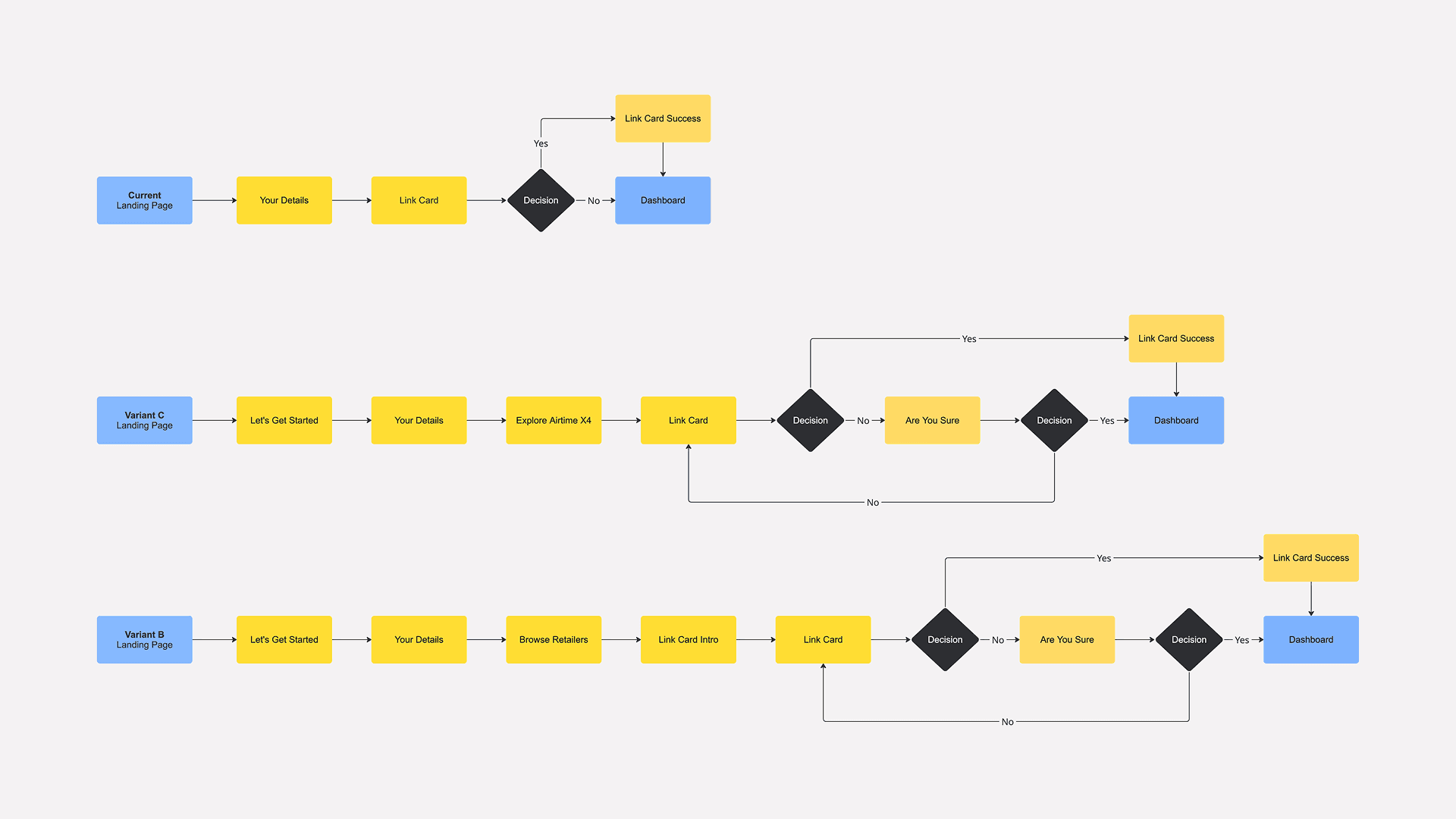
To validate the new flows, I proposed an A/B/C test where new users were shown either one of the two redesigned variants or the original flow. Over four weeks, we tracked card-add rates and funnel drop-off to understand the impact of each version.
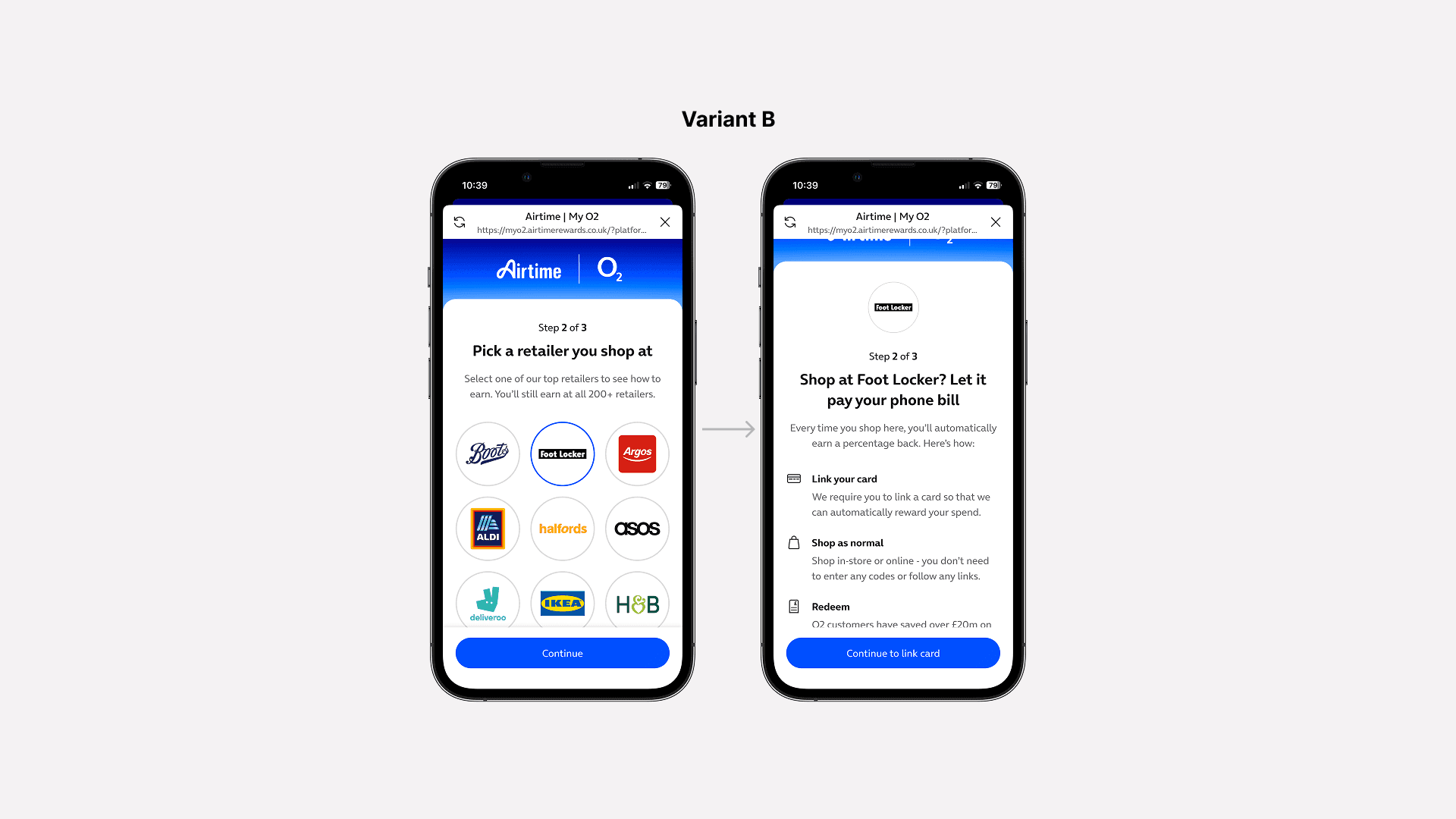
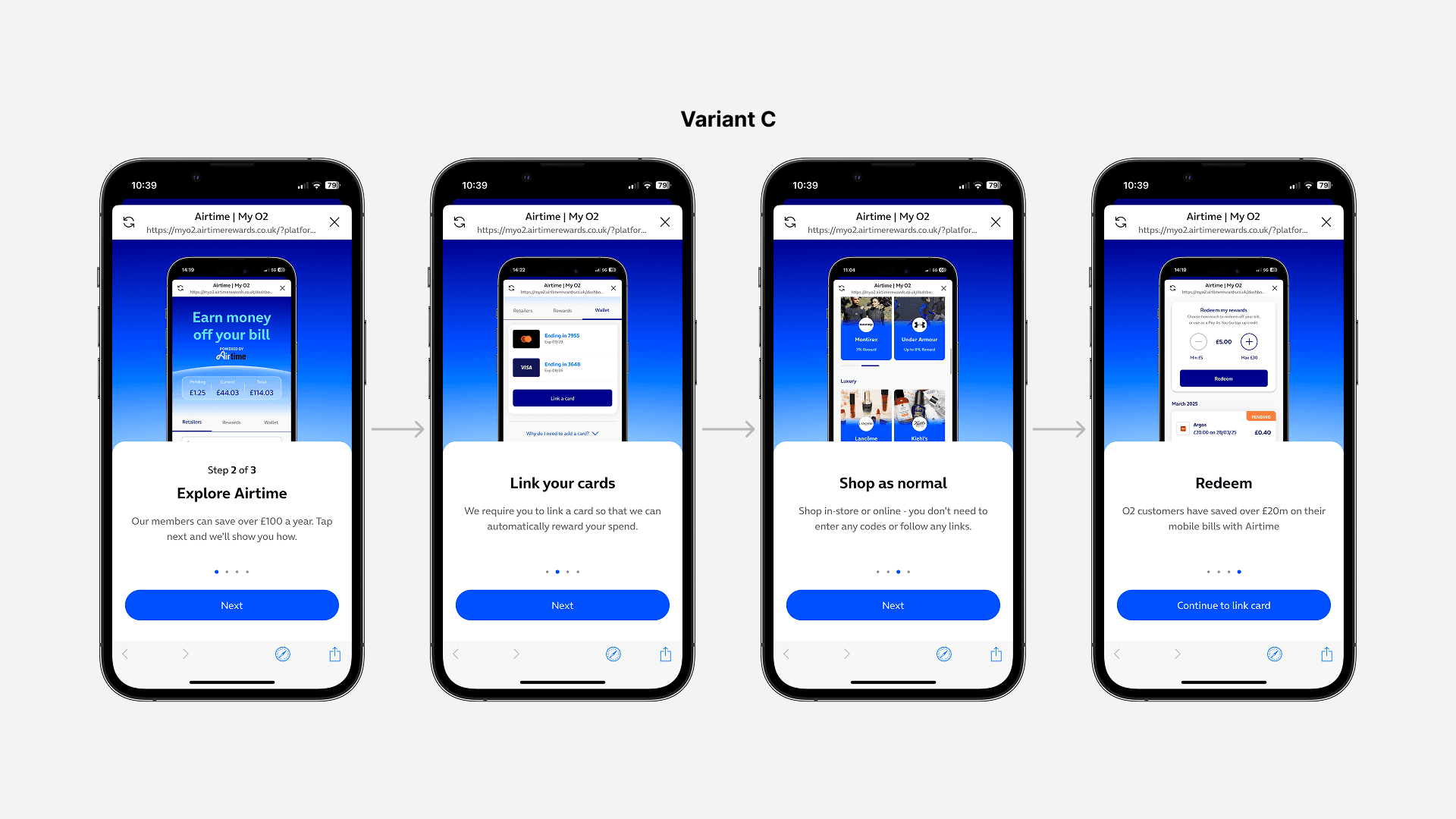
Variant B used personalisation by creating a sense of loss aversion from a user-selected retailer, while Variant C leaned on strong visuals to preview the web-app and show how it worked.
Variant C emerged as the clear winner driving a 17% increase in card adds, a 12% lift in completion, and a 33% reduction in abandonment. Variant B underperformed, largely due to backend issues that surfaced obscure or low-value retailers, though it may be an idea worth revisiting.
Outcome
We shipped Variant C to all users, and it continued to perform strongly with a 12% month-on-month improvement to the card conversion rate and 17% week-on-week. It was the most successful card-add uplift we’d seen. Previous attempts performed before SSO, produced only marginal gains.
From Airtime’s perspective, this uplift meant significantly more users were set up to earn rewards, with roughly £94k in additional spend going through the business each month. It also strengthened engagement within the MyO2 app, therefore deepening the partnership.
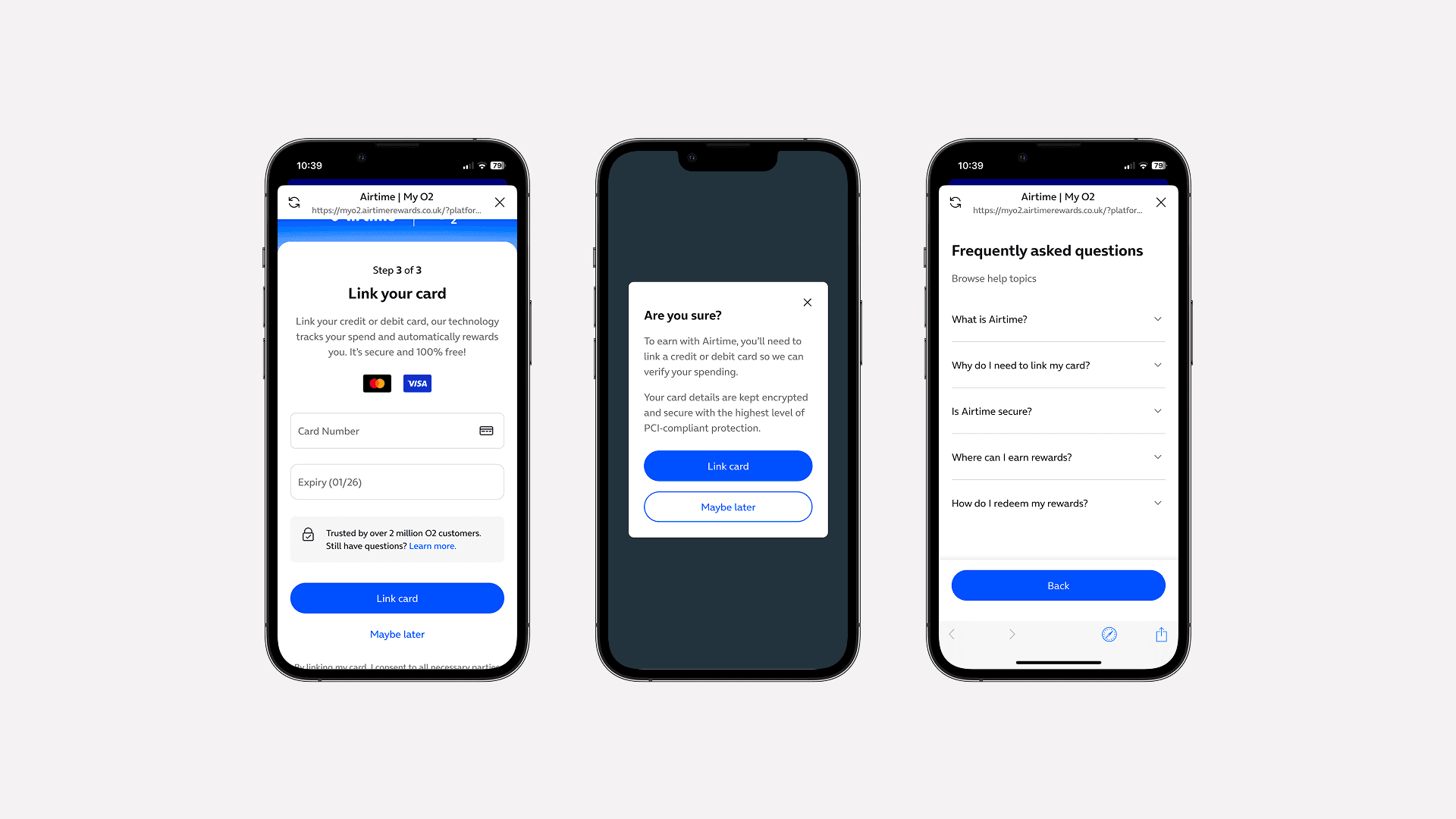
The new flow was adopted as the standard experience in Airtime’s app and other telecom partnerships. In the weeks that followed, it was shipped in the There app, a new partnership, delivering a 42% card conversion rate.
Reflection
Speed Without Context
SSO removed friction but moved users too fast to understand what they were signing up for. I learned that speed isn’t clarity, a small pause or priming step can be the difference between commitment and users dropping off.
Tweaks Weren’t Enough
Early landing page tweaks wouldn’t have shifted behaviour, and we’d seen this in previous projects. When conversion drops this sharply, the problem is rarely a micro-optimisation. It showed we needed to zoom out, challenge our assumptions and rethink the flow end to end.
Next Steps
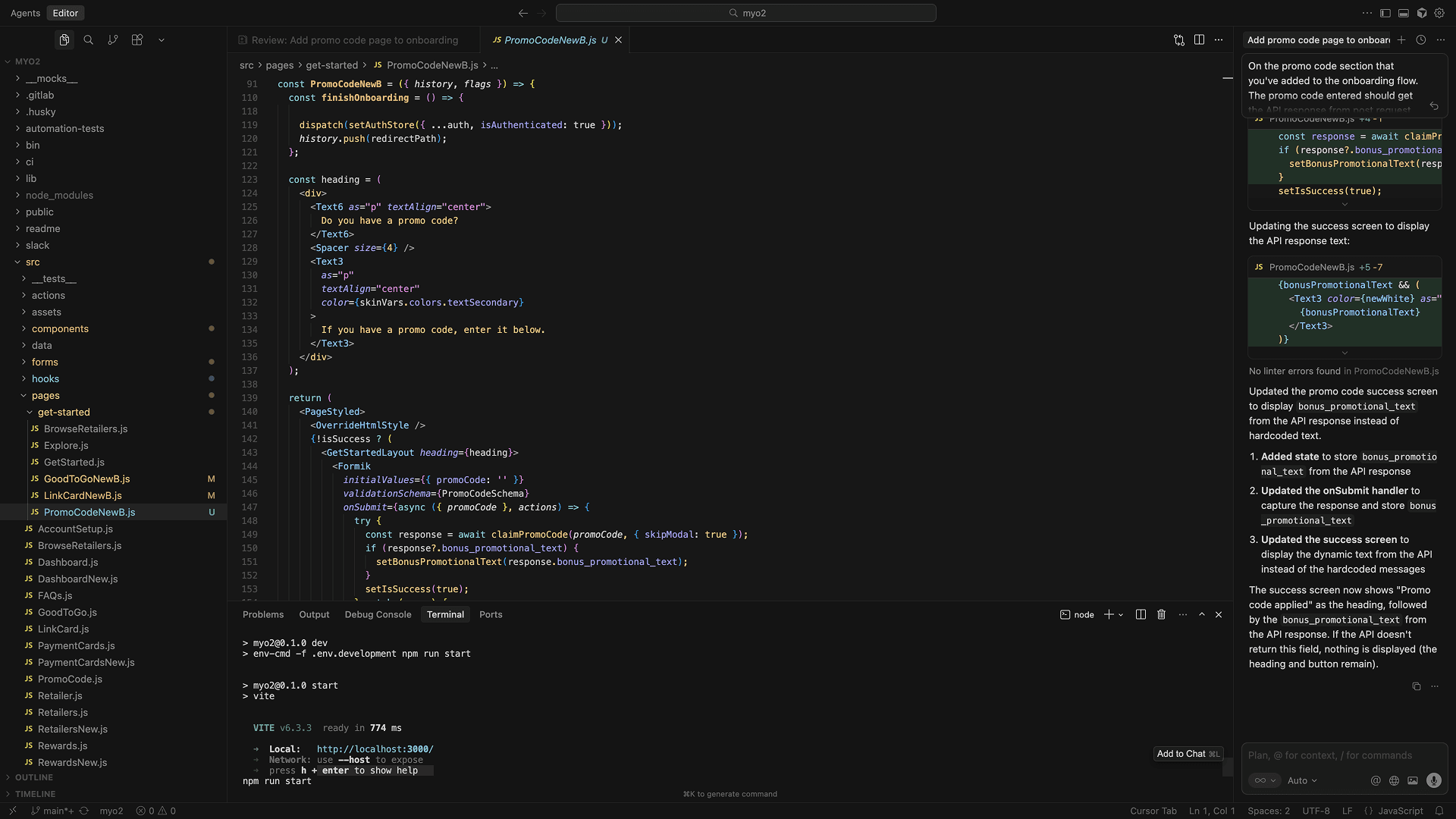
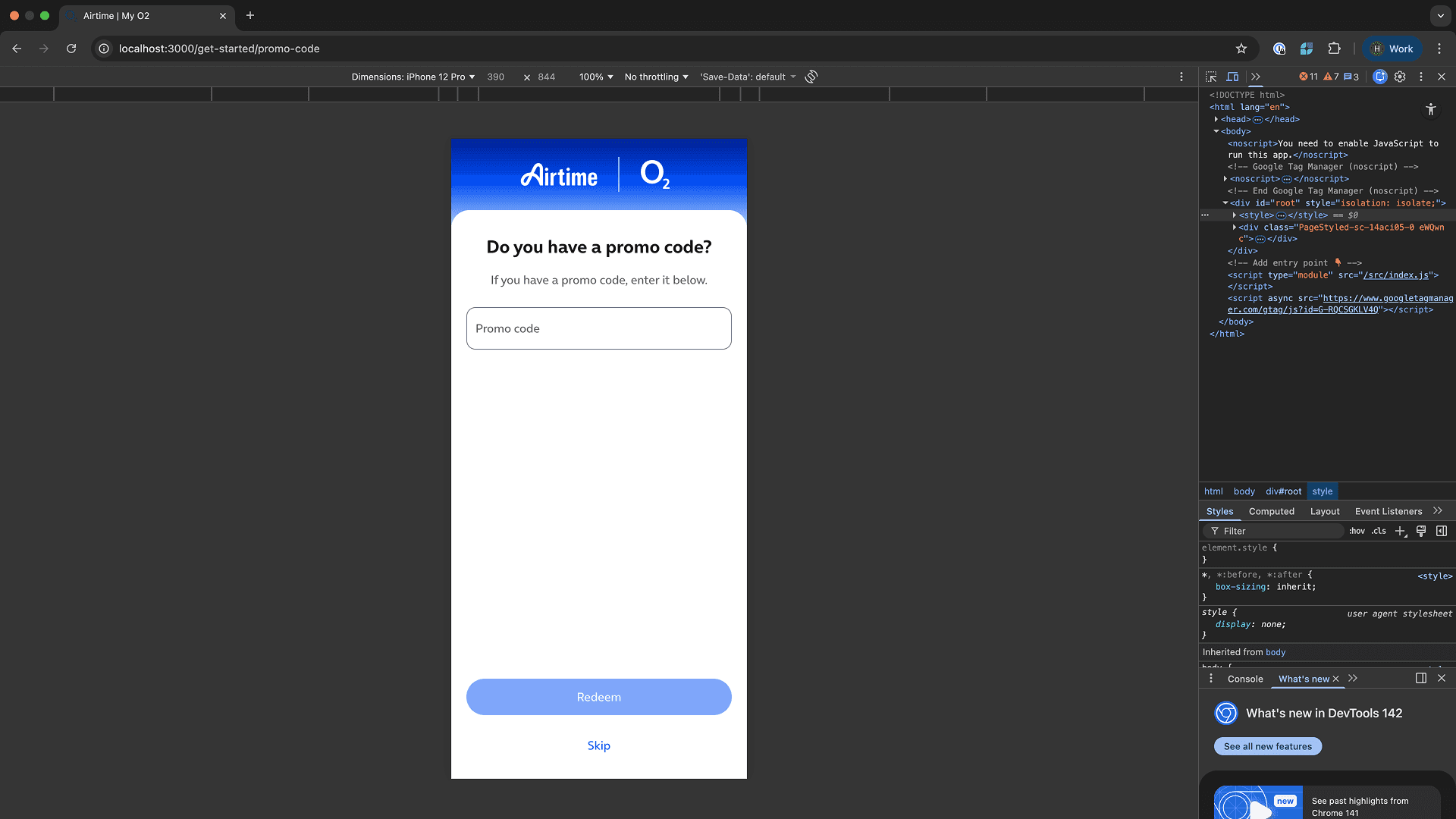
To strengthen motivation, I added a promo-code step to the flow. Using Cursor, I designed and built the page without writing code, then worked with engineers to ensure it was production ready.