Winning Back Airtime Retailers
Strategy, Product Design
2025
Lead Product Designer
Work Details
Background
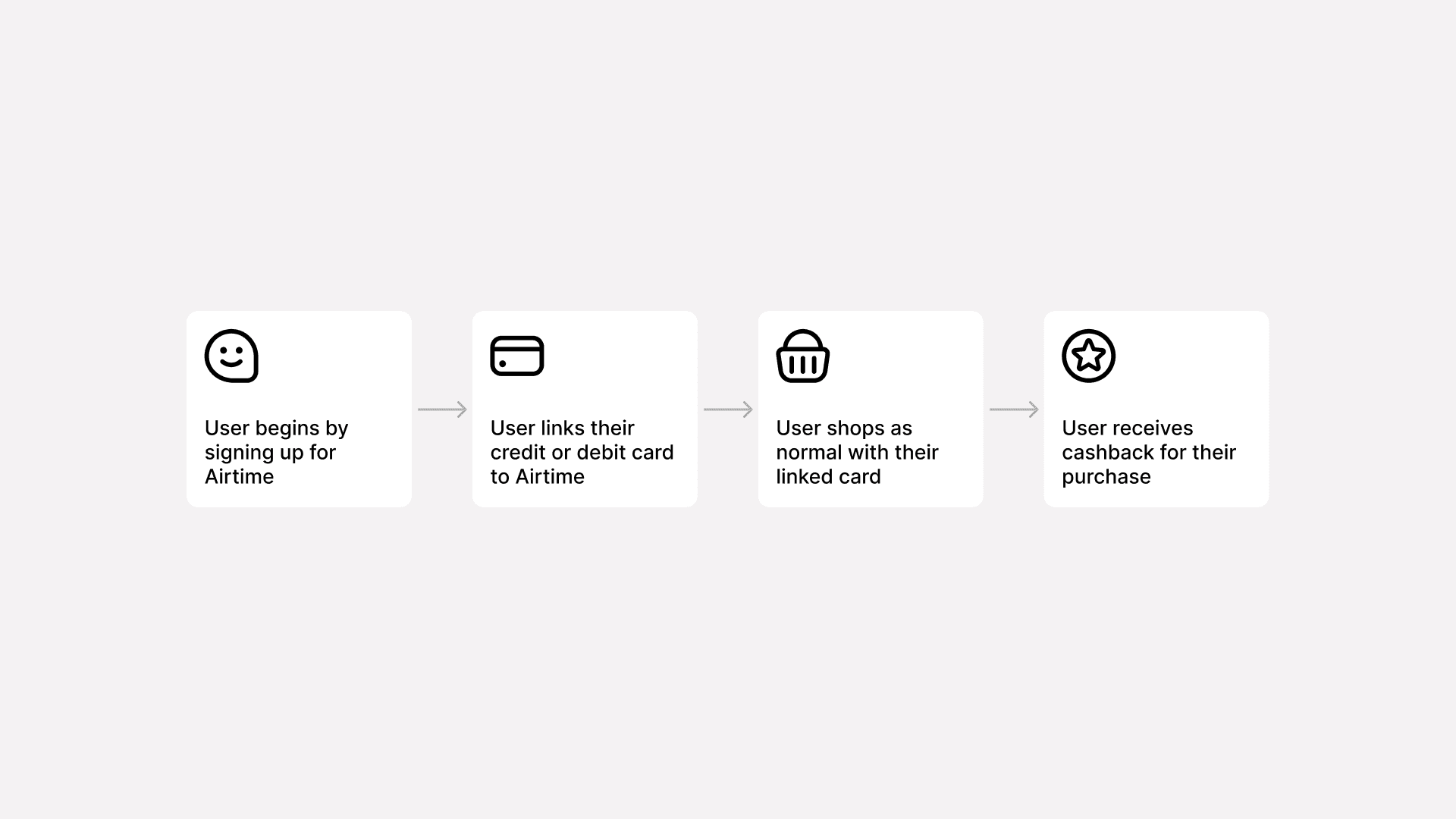
Airtime helps users save on their mobile bills by linking their payment cards. Purchases at partnered retailers are tracked and rewarded automatically meaning no codes, scans or taps. Users love Airtimes seamless, always-on experience with zero effort required.
But that very simplicity raised doubts for retailers. With no clear in-app action before purchase, they questioned Airtime’s influence. This scepticism led to partner churn, a shrinking offer base, and continuous comparisons to affiliate platforms like TopCashback and Quidco with broader reach.
Problem
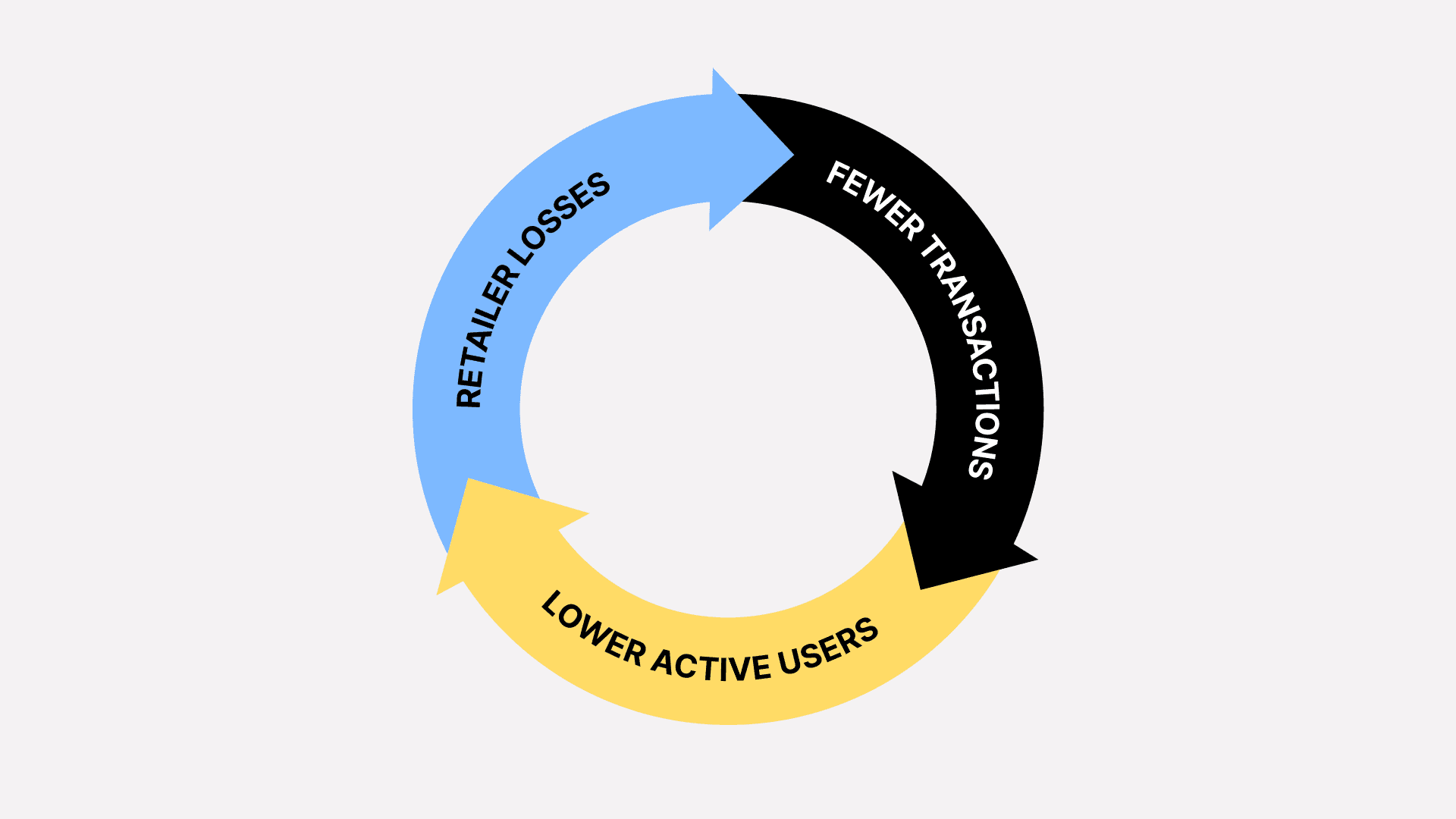
Retailers, especially top-tier ones, wanted proof that Airtime influenced spend. But our model showed no clear intent—users often checked the app only after purchases. In 2025, key partners left, and monthly active usage dropped 13% year-over-year.
Goal
The target was to sign two platinum-tier retailers annually and 2–3 gold-tier ones quarterly. Long-term, we aimed to reverse the MAU decline and achieve a 50% uplift therefore restoring value for users while securing high-impact brand partnerships they can benefit from.
Discovery
Quantitative Data
I worked with the Data team to analyse user behaviour before and after Greggs left Airtime, a platinum tier retailer. Among Greggs shoppers, sessions dropped 16%, and for Greggs-only users, 33%. The data made it clear: losing top retailers directly impacted user engagement and MAU.
Understanding Retailers
By joining sales calls, I learned affiliate teams needed clear attribution signals like last-click models. Our 90-day session rule helped, but wasn’t enough. Retailers wanted definitive proof that users were influenced by Airtime before they purchased.
Competitive Analysis
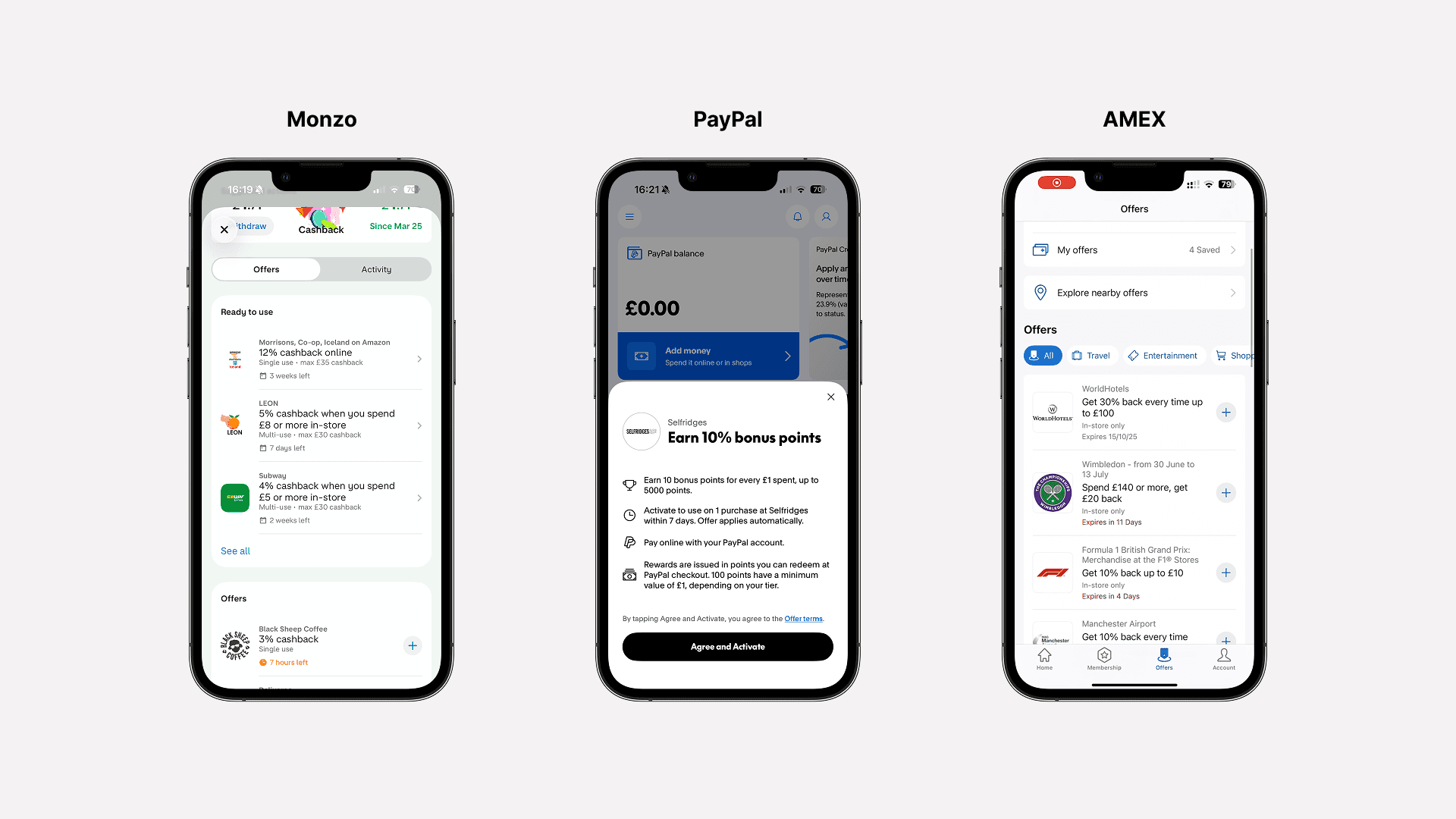
Using ChatGPT’s Deep Research, I conducted a broad analysis to understand what worked across markets. Unlike Airtime, UK CLO competitors like Monzo and AMEX use opt-in offers to show intent. Globally, Rakuten solved similar issues with a hybrid model - always-on rewards with optional boosts.
Ideation
Collaborative Exploration
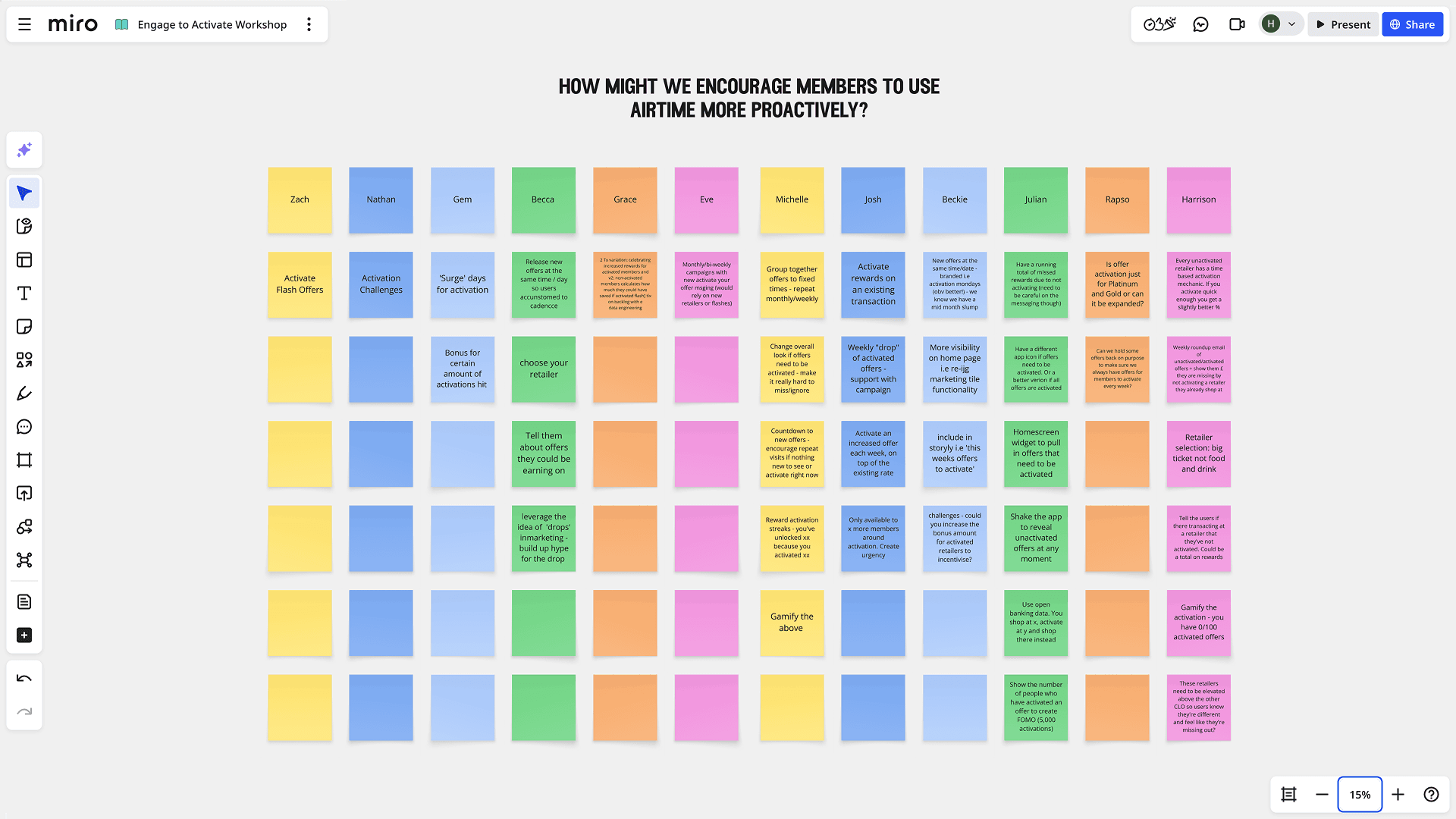
I ran cross-functional workshops to explore solutions. While many ideas emerged, we aligned on a focused first version: introduce a mechanic allowing existing users to unlock specific retailers, creating a clear signal of intent without overhauling the core experience.
Solving the Retailer Catch-22
Retailers wouldn’t commit without case studies on the mechanic working, but we needed them on board to generate that proof. I proposed using Airtime UP, our open banking-powered tier, to A/B test self-funded offers with our most engaged users in a controlled environment.
Designing the Mechanic
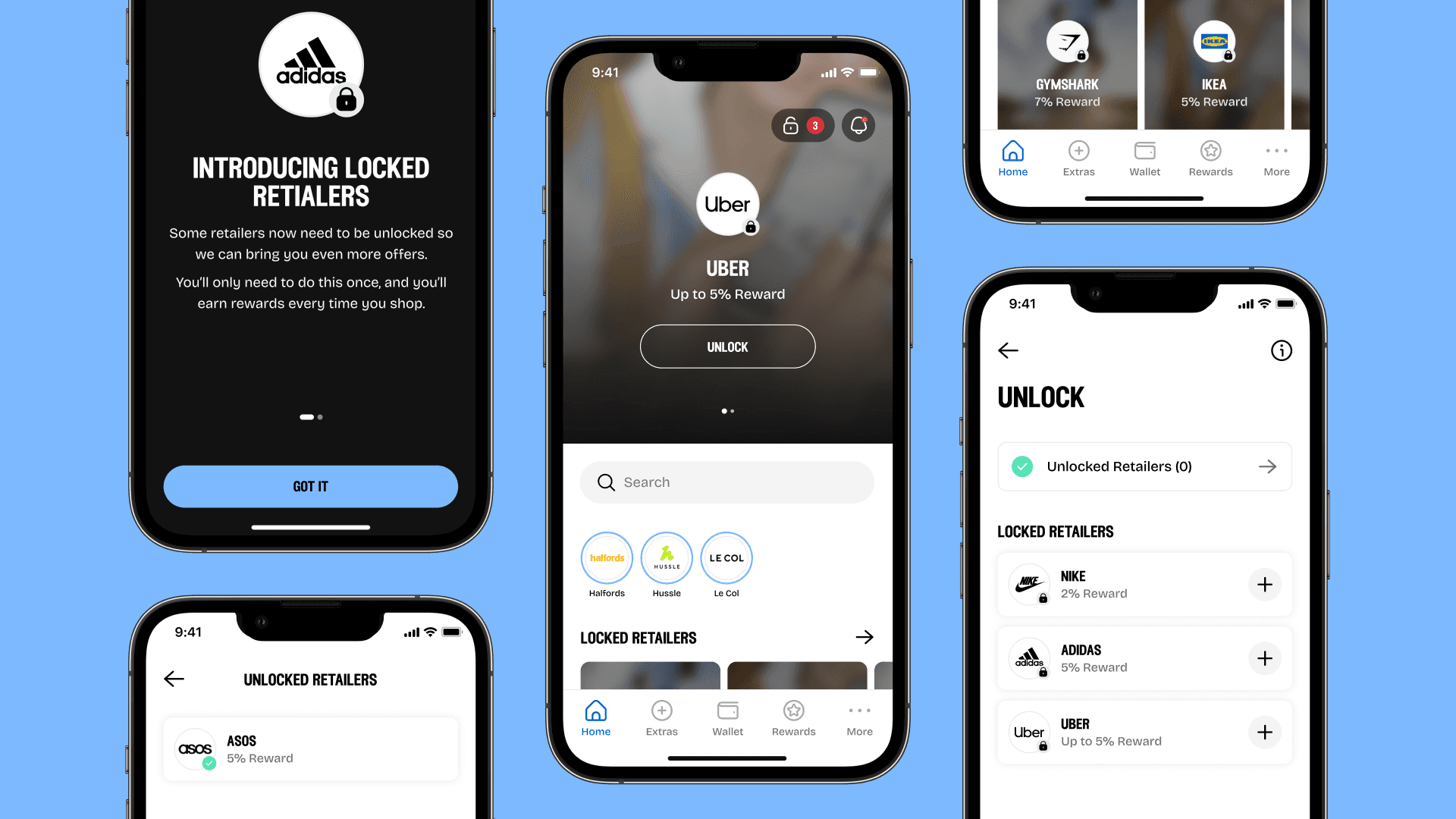
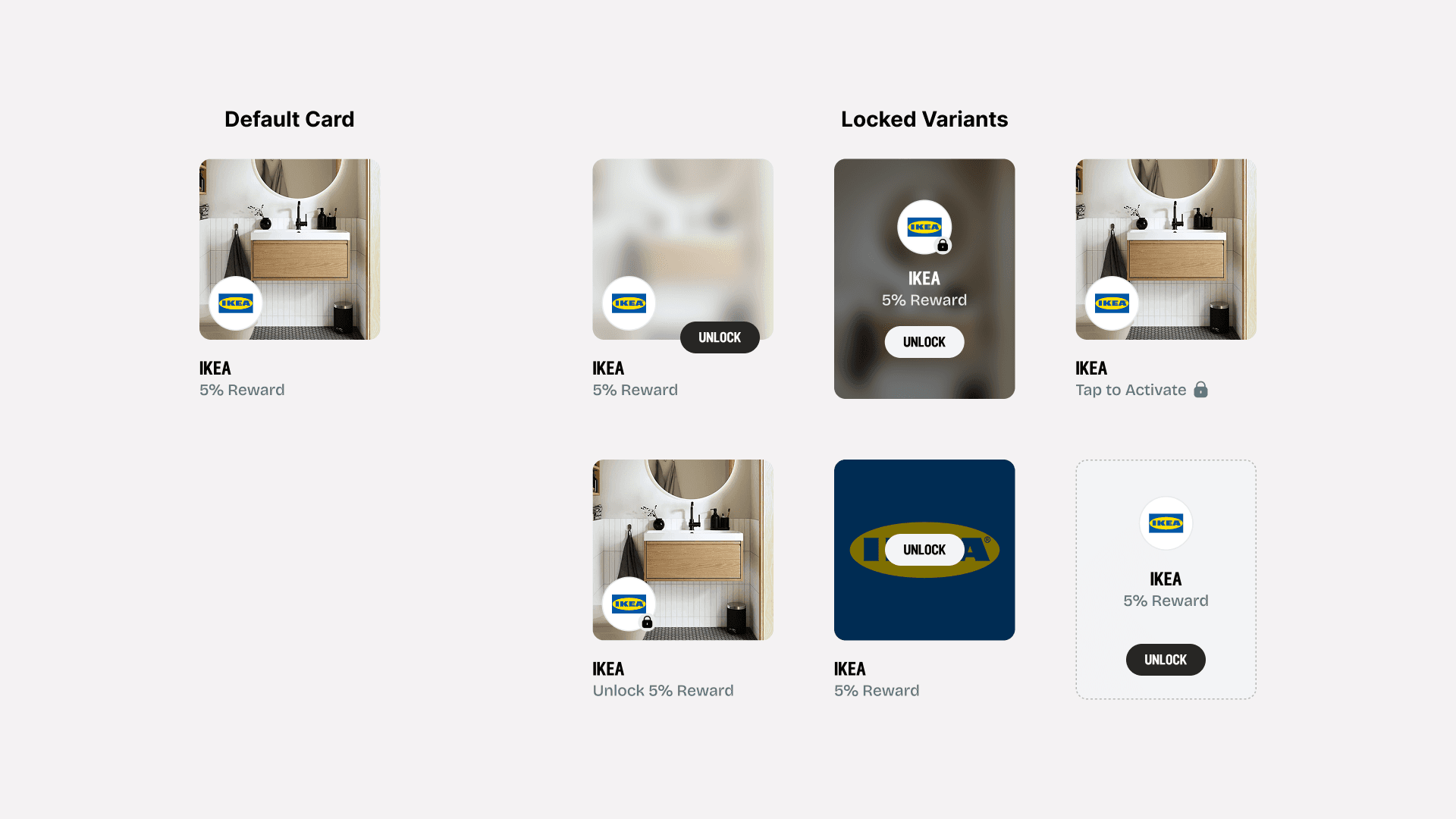
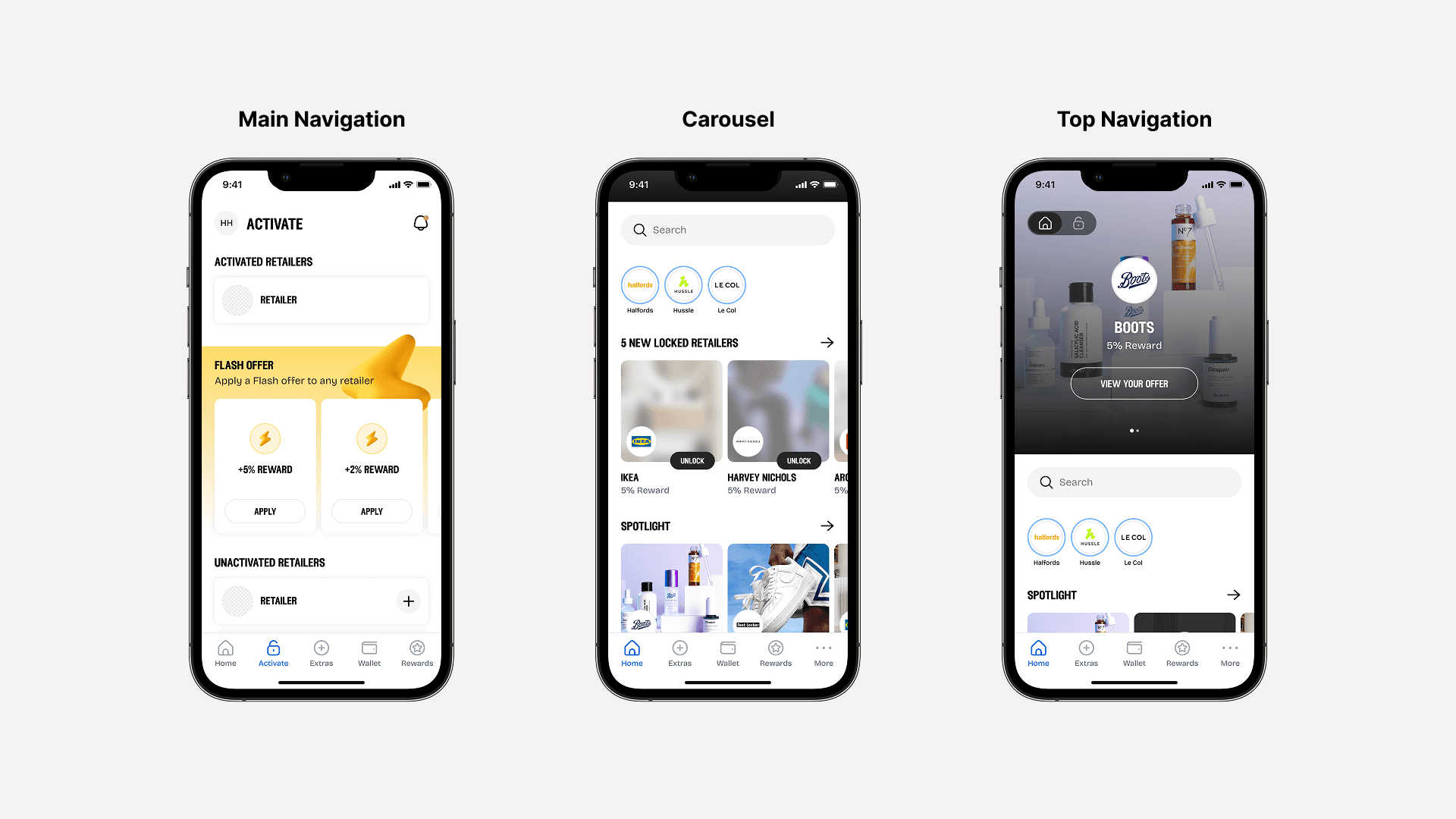
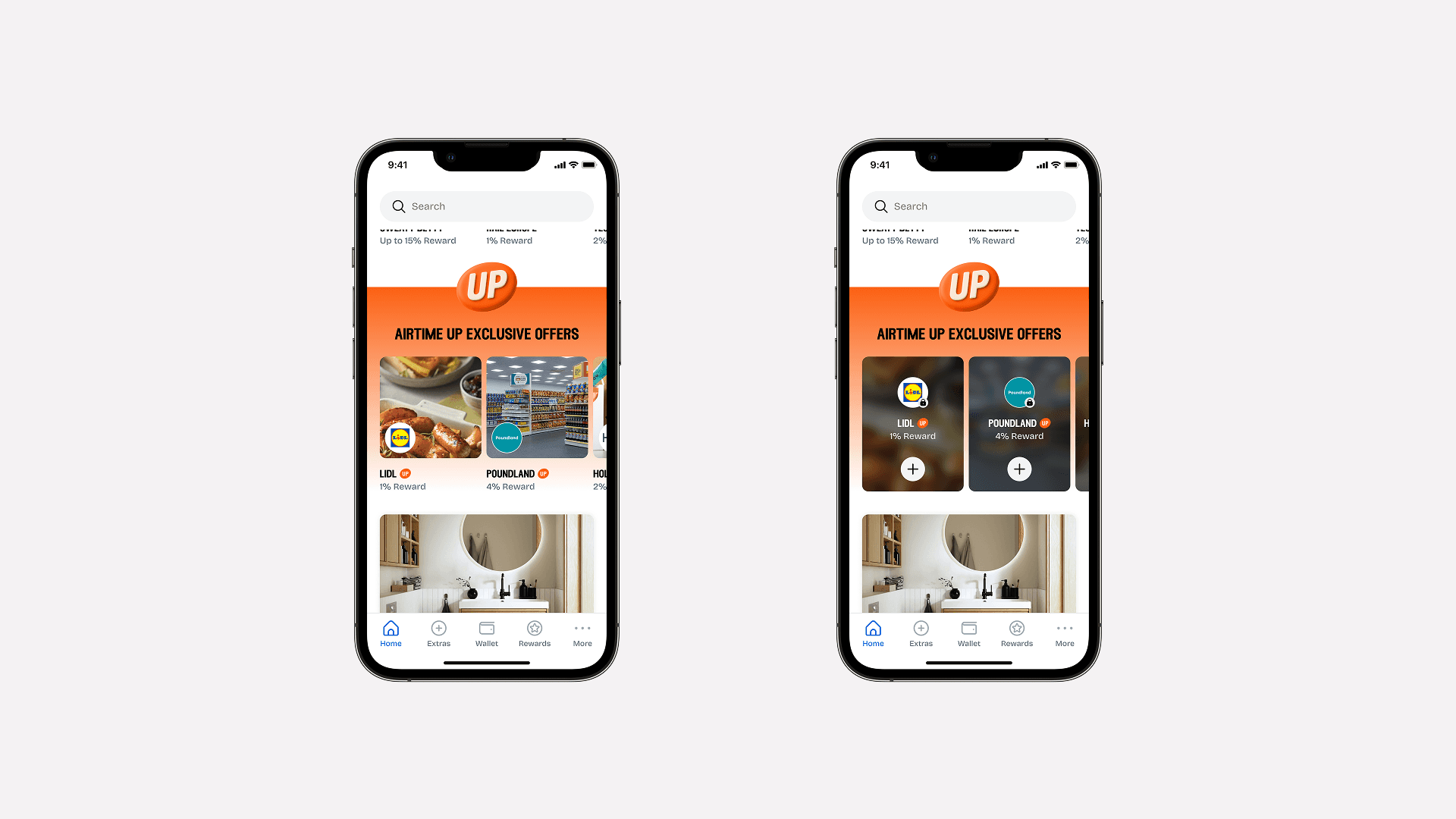
I created a visual system for locked and unlocked states within retailer cards. Animation was kept subtle to avoid disruption, but clear enough to signal change. I also explored scalable placements to ensure the mechanic fit into the broader app experience after the initial MVP.
Validation
User Interviews
I ran moderated interviews to test the unlock concept and UI. Initial reactions were negative, users didn’t understand the need to unlock. But once framed as a way to access more retailers, most accepted it. The preferred design was a dedicated page in the bottom nav, though we later chose to hold off on this ideas for future rollout.
MVP A/B Test
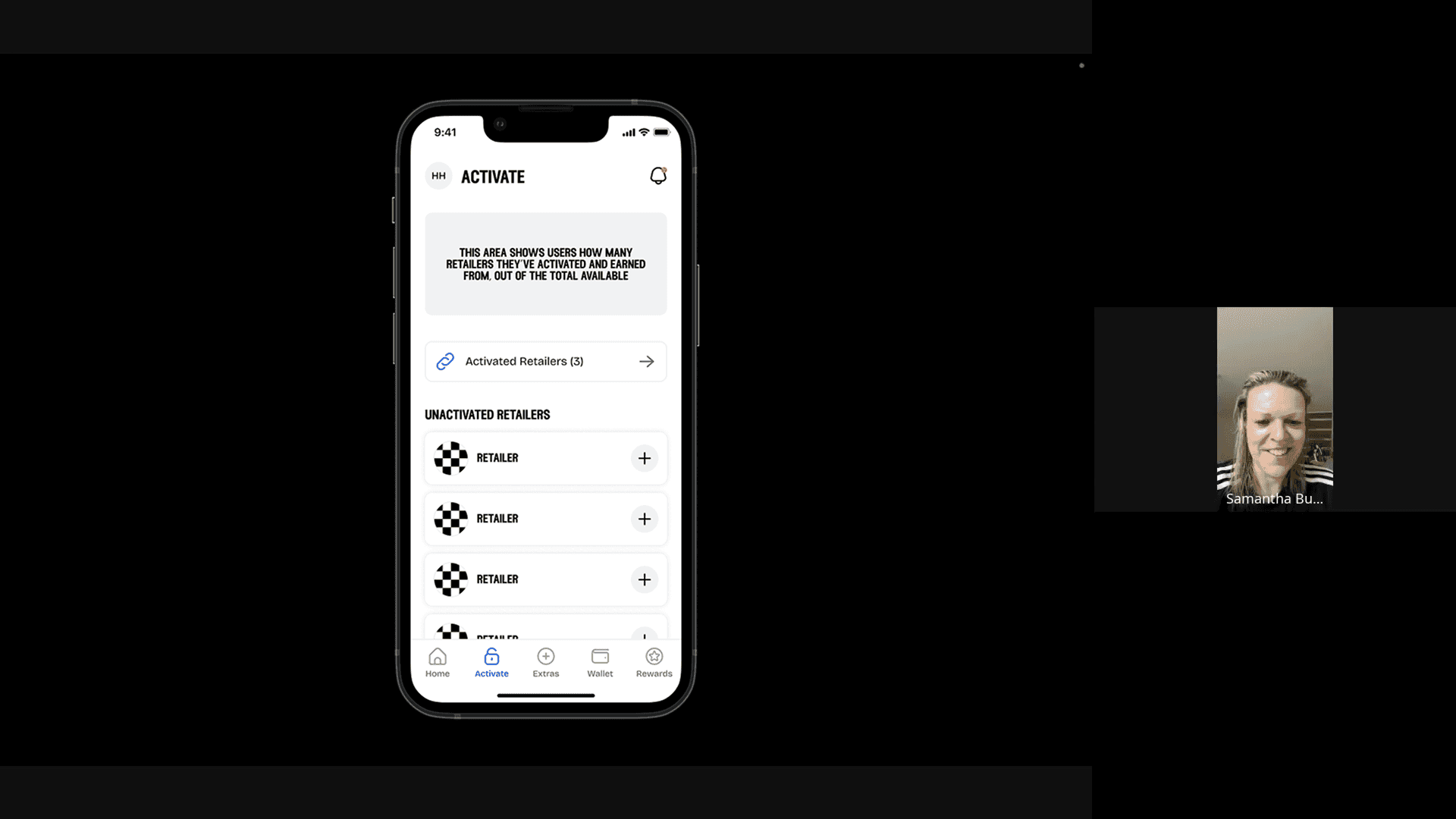
To validate the mechanic, we launched a lean MVP with Airtime UP users, using self-funded offers to minimise risk. We split users into two groups: one saw auto-activated offers, the other had to unlock manually. This let us observe how friction impacted passive spenders.
Over four weeks, conversion dropped from 17% to 8%, with a 53% dip in rewarded spend. Unlockers spent more on average, but not enough to offset the loss. Still, the test delivered what we needed: data to refine the UX and proof that helped us sign Nike and Uber. We now needed to make this feature more visible to offset the drop caused by passive spend.

Iteration
After the MVP, I refined the feature using test results and feedback. Interviews showed users expected to find the unlock mechanic in the bottom nav, but with too few retailers live, we delayed that placement until the experience felt more complete and we could justify that prominence.
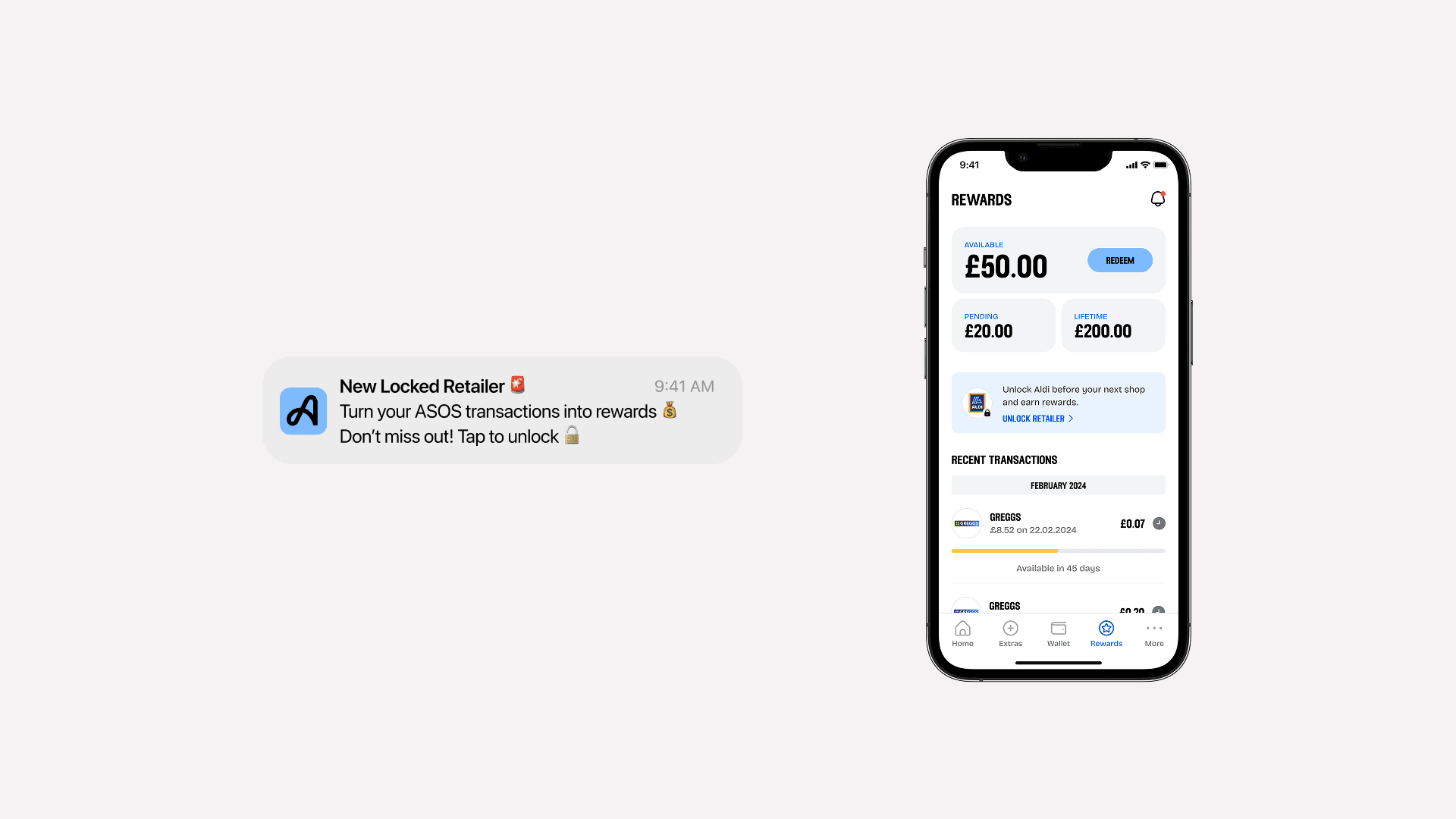
We instead gave the feature high visibility on the home screen using a badged button and also placing it in the first carousel. I worked with marketing on comms to clearly explain unlocking - framing it as the way to access top-tier retailers and more offers.
To reinforce behaviour, I added a banner to the transaction history page, our second most visited screen to highlight missed opportunities. I also introduced an app-open modal for new retailers and enabled deep links from push notifications and marketing emails.
Outcome
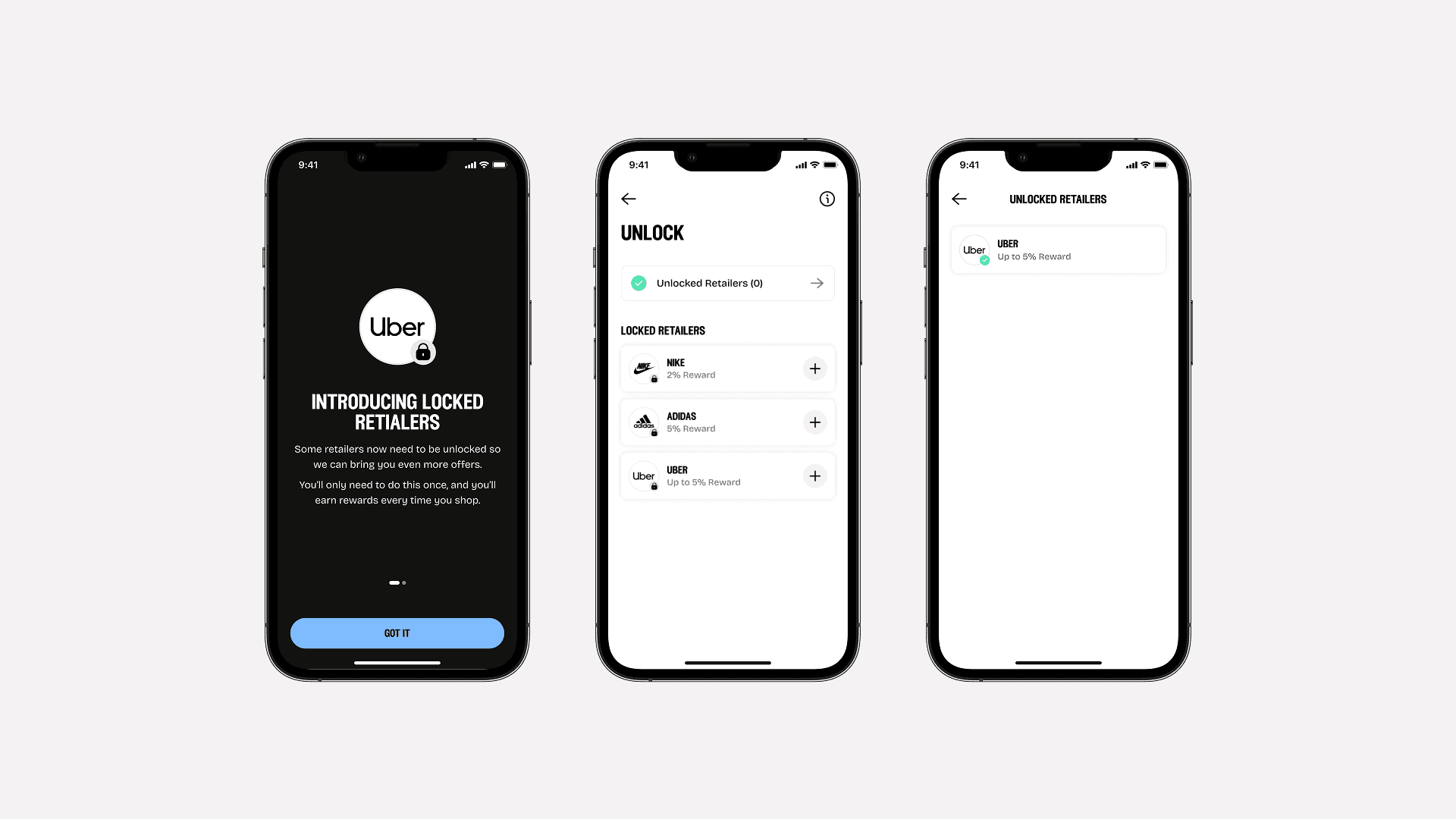
The unlock feature changed the commercial trajectory of Airtime. We signed Nike, Uber, Adidas, and several other high-value retailers, brands that had previously rejected our CLO model. Each cited the new mechanic as a core reason for coming on board.
In the first month, these partners drove £220,000 in tracked spend. The unlock page quickly became the fourth most visited area in the app, with over 580,000 views in just 28 days. Monthly active users rose 10% month over month - the first sustained upward trend in over a year. Today, 29% of all MAUs unlock at least one retailer per month.
Reflection
Design for the Business
This project reinforced that great UX also needs to support the business model. Users loved the seamless experience, but retailers needed proof of influence. The unlock mechanic bridged that gap by balancing user simplicity with commercial accountability.
MVPs as Momentum Builders
Testing in a live environment with self-funded offers gave us behavioural insight and proof of concept. It revealed the scale of the passive spend problem, informed key design decisions, and gave sales the credibility needed to sign major retailers like Nike and Uber which got the ball rolling.
Next Steps
While the first release focused on acquiring new Platinum and Gold retailers, the next step is protecting the ones we already have. We’ll make unlocking part of onboarding, incentivise users to complete it, and explore gamification to bring more people back into the app.